← Back to bench4 min build note
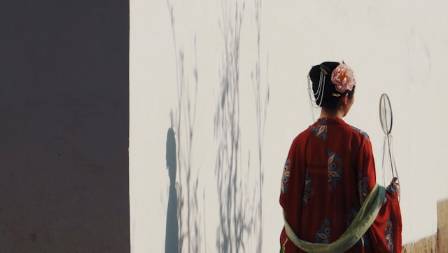
DIY note
What Is a Fun Fact About Hanfu?
Contemporary individuals can basically dress as they please, provided they can afford their desired attire—but the situation was far less flexible in ancient times.
K
Karina
Maker
Bench tip
Read the full note below and keep tools nearby.
Shelf
Hobby build
Contemporary individuals can basically dress as they please, provided they can afford their desired attire—but the situation was far less flexible in ancient times.
China has long been known as the “Nation of Graceful Robes and Ritual Propriety.” As an external reflection of spiritual culture, clothing carried much deeper significance, acting as a “symbol of status and social hierarchy.”
Thus, garments were not merely practical; they embodied the cultural background and ethos of their era, with certain details that might astonish us today.
Ⅰ. Hanfu Predates Ancient Rome
Hanfu boasts a history spanning over 3,000 years, originating in the Shang and Zhou dynasties (approximately 1600–256 BCE). This predates the Roman Empire by centuries. Archaeologists have uncovered silk garments in Warring States period tombs, featuring the same cross-collar design still utilized in modern Hanfu.
In other words: the fundamental cut of traditional Chinese clothing has endured dynasties, wars, and fashion upheavals—and it remains thriving to this day.
Speaking of Rome, its connections with China are worth noting. According to China’s Book of the Later Han, the Romans were described as “tall, upright, and similar to the Chinese,” earning them the name “Da Qin” (Great Qin). This indicates that Rome was regarded as a favorable distant land in Chinese perception.
Silk from the Silk Road—also a core material for Hanfu—was far softer and lighter than Roman linen. Back then, Rome’s craving for Chinese silk bordered on obsession; at one point, silk was valued as much as gold by weight. If America had a gold rush, Rome certainly had a silk rush! It’s fascinating to contemplate the positive outcomes stemming from cooperation between these two great civilizations.
Ⅱ. Hanfu Is Not a Single Style
Some people envision Hanfu as a single type of robe, but in reality, it’s an umbrella term encompassing numerous garments across different dynasties.
Quju: a long gown with a curved front, popular during the Han dynasty.
Zhiju: a straight-front robe that is easier to sew (and walk in).
Beizi: a loose jacket, ideal for summer wear.
Mamianqun: the iconic “horse face skirt” with pleated panels, frequently worn in the Ming dynasty.
Each dynasty had its unique charm—Tang dynasty robes were bold and vibrant, while Song dynasty outfits were more delicate and understated.
Our website offers a diverse selection of Hanfu, each accompanied by detailed descriptions to help you understand and choose a style that suits you.
Ⅲ. Sleeves Could Be Oversized — and Practical
In Chinese TV dramas, you often see swordsmen pulling various items from their sleeves—from folded letters and small scrolls to even snacks. It’s a delightful plot device, which we discussed in an earlier blog post.
Sleeves designed for holding small objects typically featured one of two characteristics. Some had naturally narrow cuffs—like “pipa sleeves” or “willow catkin sleeves”—forming a pouch-like shape. Others were cleverly tailored: even wide sleeves could have a hidden inner seam creating a sort of built-in pocket. This not only prevented items from slipping out but also allowed for discreetly carrying light essentials.

Ⅳ. Men Wore Skirts Too
In traditional Chinese clothing, skirts were not exclusive to women. Both men and women wore them, especially in earlier dynasties. The design was considered elegant and formal for ceremonial occasions. In fact, the shenyi—a robe crafted by stitching an upper garment to a lower skirt—was a unisex outfit worn by officials, scholars, and nobles alike.
It was only in more recent centuries that skirts became primarily associated with women in Chinese fashion.
Ⅴ. Hanfu Had Its Own Dress Code
In ancient China, clothing was not just about aesthetics—it was a symbol of status and etiquette.
The imperial family often wore bright yellow, a color prohibited for commoners.
Civil and military officials sported distinct embroidered patterns: cranes or golden pheasants for civil officials, and lions or qilin for military officers.
Seasonal fabrics also mattered—silk gauze for summer, lined robes for winter.
Wearing the incorrect style or color could be deemed disrespectful, or even illegal, in certain periods.
Examples like these are countless—flip through history books and you’ll find rules that could literally cost you your life.
Take the Western Zhou Dynasty, for instance: the Duke of Zhou established a comprehensive set of clothing rituals, including a ban on using red or purple fabrics for undergarments. Violating these dress codes was treated as severely as treason.
The Jin Dynasty’s Jin Ling: Clothing Regulations specified that only officials of rank 2 or higher could wear certain “forbidden items” such as mountain deer or white badger ornaments, or pure gold/silver accessories. Commoners using them? That was against the law. And making or wearing “outlandish clothing”? Also punishable by law. So if you tried cosplay back in the Jin Dynasty, you’d better be cautious!
The Tang Dynasty’s Tang Code even stipulated 100 blows with a rod for violating clothing rituals! Things grew stranger in the Qing Dynasty: the Great Qing Legal Code stated that anyone—including officials—using dragon or phoenix patterns on clothing would receive 100 blows and 3 years in prison. Even craftsmen making such items got 100 blows, with the garments confiscated.
Ⅵ. It Influenced Other East Asian Clothing
The cross-collar and wide sleeves of Hanfu inspired traditional attire in Japan (kimono), Korea (hanbok), and Vietnam (áo dài). For example:
- Early Japanese kimonos were directly modeled after Tang dynasty court clothing.
- Korea’s jeogori jacket and chima skirt reflect the tailoring of Ming dynasty Hanfu.
- Vietnam’s áo giao lĩnh shares the overlapping collar style with Hanfu.

Nearby projects
· en
Essential Italian Gastronomy: 10 Iconic Pasta Dishes
Julian Weatherby

· en
The Role of the Ocean Surface
William Radcliff
· en
Steps to Painting Delicate White Roses
Alistair Kane

· en
Capybaras: Get to know the world’s largest rodent
Lena Foster
· en
Fruit Platter Ideas for Any Occasion
Finn Dawn
· en
Guardians of the Wild How Wolves Restore Ecological Harmony and Why We Must Preserve Them
Weston Chloe