DIY note
The romance and history of the message in a bottle
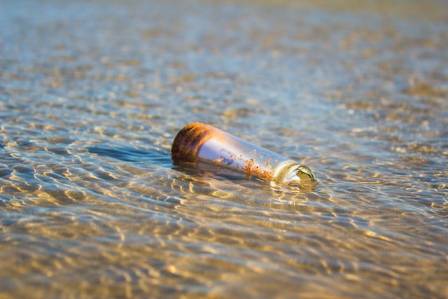
There is something deeply romantic about the thought of a message in a bottle—a feeling of hope, trust, and faith in fate and chance. It reminds me somewhat of the helium balloons I used to release as a child, each carrying a small note*. Both gestures contain the possibility that the message might travel somewhere unexpected and become the beginning of a new story.
Kaelen Moore
Maker
Bench tip
Read the full note below and keep tools nearby.
Shelf
Hobby build
There is something deeply romantic about the thought of a message in a bottle—a feeling of hope, trust, and faith in fate and chance. It reminds me somewhat of the helium balloons I used to release as a child, each carrying a small note*. Both gestures contain the possibility that the message might travel somewhere unexpected and become the beginning of a new story.
Before looking into their history, I had always imagined that most messages in bottles ended much like those balloons: disappearing without a trace and never being heard from again, or perhaps remaining only a short distance from the place where they were first released. They seemed to belong more naturally to stories and imagination than to everyday reality.
Messages in Bottles and the Search for Knowledge
In reality, bottles carrying messages and set adrift on the sea have served several very practical purposes throughout history, particularly in scientific research and communication.
The earliest recorded use of messages in bottles dates back to 310 BC, when the Greek philosopher Theophrastus released bottles into the sea while attempting to demonstrate his theory that the Atlantic Ocean flowed into the Mediterranean. The practice of placing messages in bottles continued for centuries as a method of studying ocean currents, remaining useful well into the twentieth century.
A Means of Communication at Sea
Before wireless telegraphy was developed, bottles were also among the few ways people aboard ships could send information beyond their immediate surroundings. The possibility of rescue was often extremely small, but such messages could serve as final words to family and friends. They could also provide important clues about maritime disasters and missing vessels.
For some ships that disappeared without leaving any other trace, the discovery of a bottle that had washed ashore eventually revealed what had happened. One example involved the SS Naronic in 1893. A bottle from the ship was discovered in England three years later, providing evidence that the vessel had gone down after encountering an iceberg.
Even in more recent times, messages placed inside bottles have played a role in saving lives. They contributed to the rescue of South American refugees who had been abandoned at sea in 2005, as well as the crew of an Italian vessel taken by Somali pirates in 2011.
Messages of Love, Confessions, and Farewells
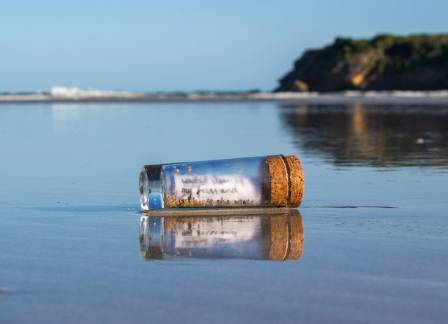
Not every message carried by the sea has been intended for practical communication. Many have been intensely personal, ranging from final farewells written aboard sinking ships to romantic declarations and even confessions of murder, although the truthfulness of such accounts has varied.
During the Victorian and Edwardian eras, messages discovered along the coast became sufficiently common that newspapers sometimes printed them in recurring columns. Paul Brown’s book Messages from the Sea offers a compelling and moving collection of these remarkable communications.
Sending a message in a bottle can be understood as a form of reaching toward an unknown person. It allows someone to release a secret, surrender control, and place their words in the hands of fate. The act may be nothing more than a child’s game, a practical experiment, or an elaborate hoax. Whatever the motivation, however, it involves stepping into an uncertain story and creating the possibility of an unexpected reply.
When Chance Gives a Message New Meaning
A particularly moving recent story involved a message released by a child that was discovered only after her tragically premature death. It beautifully illustrates how writing a few words on paper and then entrusting them to chance can eventually give those words an entirely unexpected significance, offering comfort and meaning long after they were written.
There are far too many stories involving messages in bottles to recount them all here, yet each one contributes something to the powerful image of a bottle drifting across the ocean, eventually discovered and opened by a stranger somewhere else in the world and at another point in time.
That sense of an unfolding story is what I find most captivating. Unlike an ordinary letter sealed inside an envelope, a message in a bottle carries an atmosphere of mystery and romance, tragedy and possibility, love and hope. Perhaps that is why bottles make such evocative vessels for memories, marriage proposals, personal keepsakes, or unexpected messages waiting for someone to discover and transform into a story of their own.

Nearby projects

· en
The Most Beloved Tabby: Why You Should Adopt a Tabby Cat
Christopher Davis

· en
Best classic cars for a small garage
Leo James

· en
The Five Most Renowned Landmarks in France
Faith

· en
Unveiling the Cosmic Palette: The Average Color of the Universe
Alexander Jude
· en
5 Interesting Facts About Seals
Kevin Abrams

· en
Six reasons why cats make great pets
Mason Grey