DIY note
Crested Lark
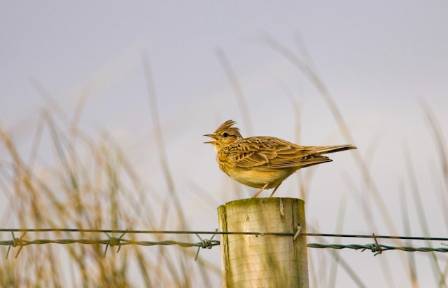
The Crested Lark (Galerida cristata) is a compact and sturdy songbird, measuring around 17 cm in height with a wingspan between 29 and 38 cm. It weighs roughly 37 to 55 grams. Both males and females look alike, featuring brown plumage that is lighter underneath and a prominent crest on the head, which is often raised during courtship or territorial displays.
Grace Howard
Maker
Bench tip
Read the full note below and keep tools nearby.
Shelf
Hobby build
The Crested Lark (Galerida cristata) is a compact and sturdy songbird, measuring around 17 cm in height with a wingspan between 29 and 38 cm. It weighs roughly 37 to 55 grams. Both males and females look alike, featuring brown plumage that is lighter underneath and a prominent crest on the head, which is often raised during courtship or territorial displays.
The tail is relatively short, with lighter brown feathers on the edges, and the underwings show a reddish tint in flight.
Identification
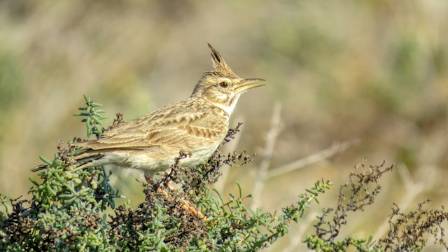
Adult Crested Larks are easily recognized by their streaked brown feathers and paler underparts. Juveniles display extra spots on their backs. The most distinctive feature of this species is the crest, visible at all times but especially noticeable during displays. When in flight, the reddish underwings are an important identification trait.
Habitat
Crested Larks prefer dry, open areas such as agricultural fields, roadside edges, and wastelands. They have adapted well to human-modified landscapes and can frequently be seen in regions with sparse vegetation, including sandy patches near railways, docks, and airports.
Range and Distribution
This species has a broad distribution across temperate Eurasia, ranging from Portugal to northeastern China and eastern India. In Africa, it is found as far south as Niger. Crested Larks are primarily resident birds, meaning they do not undertake seasonal migrations, although they are rare visitors to Great Britain.
Behavior
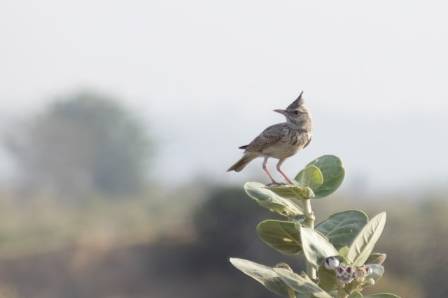
Crested Larks are known for their undulating flight style and melodious, warbling songs, which can be performed from high in the sky or at ground level. They are territorial and sing to mark their presence, often perching at heights of 30 to 60 meters.
Song and Calls
Their song consists of a flowing sequence of notes, commonly written as "whee-whee-wheeoo" or "twee-tee-too," and is a distinctive sound in the open habitats they occupy.
Breeding
Crested Larks build nests on the ground in shallow depressions, using dry grasses and roots. Females usually lay three to five brown eggs with fine speckles. The incubation period lasts about 11 to 12 days. The chicks are precocial, leaving the nest early and becoming fully fledged at roughly 15 to 16 days. This species often raises two broods each year.
Diet
Crested Larks are mainly herbivorous, feeding on grains and seeds such as oats, wheat, and barley. They also eat insects, particularly beetles. Both parents feed the chicks, and juveniles begin foraging independently shortly before they are able to fly.
Conservation
The IUCN Red List classifies the Crested Lark as Least Concern, indicating it is not currently endangered. Global population estimates range from 22 million to 91.2 million mature individuals, although numbers in Europe have been declining since 1982.
Nearby projects

· en
16 Top Foods for Supporting a Healthy Weight
Harper Kinsley

· en
10 Adorable Fluffy Creatures to Brighten Your Day
Willow

· en
Tree Frogs: A Diverse Group of Climbing Amphibians
Caroline Baker

· en
Complete Classic Car Buyers Guide
Alexander Gray

· en
10 spots to marvel at Victoria Harbour
Darius Lennox

· en
5 Interesting Facts About Seals
Kevin Abrams