DIY note
Tree Frogs: A Diverse Group of Climbing Amphibians
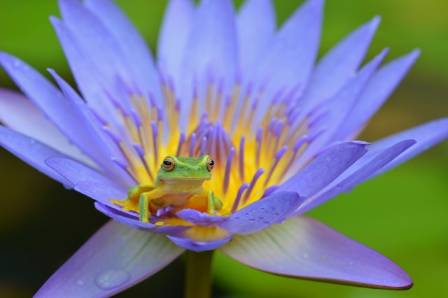
Tree frogs are a highly varied group of amphibians with more than 800 known species around the world. Although their name suggests that they all spend their lives in trees, this is not always true. The characteristic that connects tree frogs is actually related to their feet. The final bone in each toe, known as the terminal phalanx, has a claw-like shape. Many species also have specialized toe pads that help them grip surfaces while climbing, along with additional bone structures that improve their ability to move through vegetation.
Caroline Baker
Maker
Bench tip
Read the full note below and keep tools nearby.
Shelf
Hobby build
Tree frogs are a highly varied group of amphibians with more than 800 known species around the world. Although their name suggests that they all spend their lives in trees, this is not always true. The characteristic that connects tree frogs is actually related to their feet. The final bone in each toe, known as the terminal phalanx, has a claw-like shape. Many species also have specialized toe pads that help them grip surfaces while climbing, along with additional bone structures that improve their ability to move through vegetation.
Tree frogs come in many different colors, but species found in the United States are most commonly green, gray, or brown. Some species have remarkable color-changing abilities, such as the squirrel tree frog (Hyla squirella), which can adjust its appearance to better match its surroundings.
Size and Physical Features
Tree frogs vary greatly in size, but most species that live in trees are relatively small because they depend on leaves and thin branches for support. The largest known tree frog is the white-lipped tree frog (Litoria infrafrenata), found in Australia and Oceania, which can reach lengths of 4 to 5.5 inches (10 to 14 centimeters).
In the United States, the largest tree frog is the introduced Cuban tree frog, which can grow between 1.5 and 5 inches (3.8 to 12.7 centimeters) long. At the opposite end of the scale, some of the world’s smallest tree frogs measure less than one inch (2.5 centimeters) in length.
Global Distribution and Habitats
Tree frogs can be found on every continent except Antarctica, with the greatest variety occurring in tropical regions of the Western Hemisphere. Around 30 species are found in the United States, while more than 600 species inhabit Central and South America.
Many tree frogs are adapted for life above the ground. Their sticky toe pads, strong legs, and climbing abilities allow them to move easily through trees and plants. However, not every tree frog lives in the canopy. Some species prefer environments near ponds, lakes, or damp vegetation close to the ground.
Tree frogs are prey for many types of animals, including mammals, birds, reptiles, and fish. To survive, many species rely on camouflage to blend into their surroundings. Those that spend most of their time in trees can avoid many ground-based predators by remaining hidden among branches and leaves.
Feeding Habits
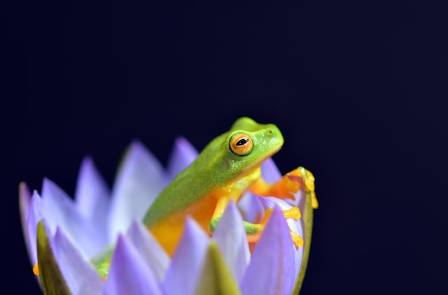
Adult tree frogs are primarily insect-eaters. Their diet consists mainly of small invertebrates such as flies, ants, crickets, beetles, moths, and other insects.
During their tadpole stage, however, most tree frogs have a very different diet. Young tadpoles are usually herbivorous and feed mainly on plant material and algae before transforming into adults.
Mating and Life Cycle
Male tree frogs usually attract females by producing special calling sounds. Each species has its own unique call, allowing females to identify males of the same species. One of the most recognizable frog sounds, the famous “ribbet” call, comes from the Baja California tree frog (Pseudacris hypochondriaca). This familiar sound has been widely used in outdoor scenes in movies, even in places where the species does not naturally occur.
After mating, most tree frogs begin life as tadpoles that hatch from eggs laid in water. As they develop, tadpoles gradually lose their tails and grow legs until they become fully formed adult frogs. Some species hatch directly as tiny versions of adults, but this is less common.
The lifespan of tree frogs differs greatly between species. Some, like the Australian green tree frog (Litoria caerulea), can live for more than 15 years in captivity. Other species survive less than three years and are considered short-lived. North American gray tree frogs, including Hyla versicolor and Hyla chrysoscelis, typically have a medium lifespan of around five to nine years.
Conservation Challenges
Amphibians around the world are experiencing serious population declines and are among the animal groups most vulnerable to extinction. Because frogs absorb oxygen and water through their skin, they are highly sensitive to environmental changes.
Tree frogs face many threats, including habitat destruction, pollution, climate change, and infectious diseases such as chytridiomycosis. Protecting wetlands, forests, and other natural habitats is essential for maintaining healthy tree frog populations.
Interesting Fact About Tree Frogs
Although the name suggests otherwise, not every member of the tree frog family Hylidae lives in trees. Likewise, not every frog that climbs or lives in trees belongs to the true tree frog family. Their name describes a lifestyle commonly associated with them, but their diversity is much broader than many people realize.
Nearby projects

· en
The World's 5 Wealthiest Cricket Boards
Julia

· en
Effective Indoor Attire for Maintaining Body Heat
Alexander James Whitmore

· en
Mountain Lakes Wilderness
Julian Marlowe

· en
Bryggen Bergen: A Journey Through Norway’s Hanseatic Heritage
Eliana Vesper

· en
Science-Backed Benefits of Rock Climbing in 2025
Luke

· en
Your Guide to Buying Water Bottles
Clara Reeves