← Back to bench2 min build note
DIY note
Verified Facts About Morpho Butterflies
The genus Morpho has about 29 species and ~ 147 subspecies, mostly native to Central and South America.
A
Alexander Thompson
Maker
Bench tip
Read the full note below and keep tools nearby.
Shelf
Hobby build
Number of Species & Subspecies
The genus Morpho has about 29 species and ~ 147 subspecies, mostly native to Central and South America.
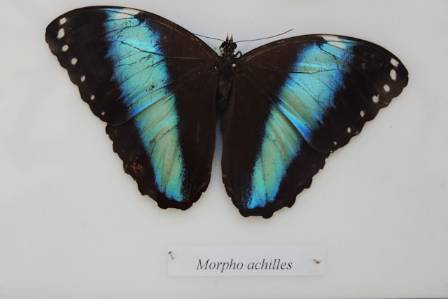
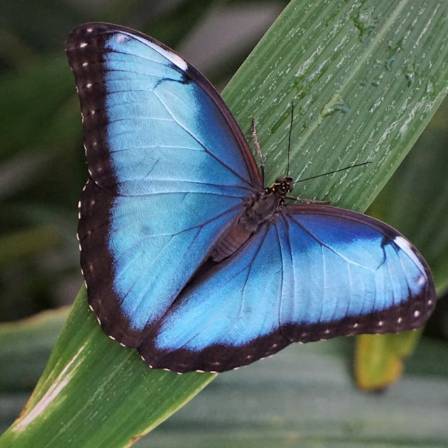
Structural Color (Iridescence) Their vivid blue coloring does not come from pigment, but from microscopic structures in the scales on the dorsal (top) side of their wings that reflect and refract light. The iridescence means the color changes slightly with viewing angle.
Camouflage Underside The underside of Morpho wings is typically dull brown with patterns (often eyespots) which help hide them when their wings are closed. This provides protection from predators.
Size / Wingspan They are large butterflies: many Morpho species have wingspans ranging from about 5 to 8 inches (≈ 12–20 cm).
Diet of Adults As adult butterflies, they do not eat solid leaves. Instead, they feed using a proboscis to consume fluids: rotting fruit, tree sap, fungi, and sometimes liquids from decomposing matter or mud (for minerals).
Life Cycle Their life cycle includes egg, larva (caterpillar), pupa (chrysalis), and adult stages. The caterpillars are often hairy, feed on leaves (especially of plants in the legume family), and go through several molts before pupation.
Short Adult Lifespan Once they emerge as adults, Morpho butterflies often live only a few weeks (often roughly 2-3 weeks or up to about a month or slightly more) during which their main focus is feeding, breeding, and laying eggs.
Behavior & Habitat
-
They are mostly forest-dwellers—rainforest understories, along riverbanks, forest edges.
-
Males often patrol specific stretches near rivers or forest trails, using their bright blue flashes in flight to establish territory and attract mates
Threats & Conservation
Habitat loss (deforestation), capture for the specimen trade, and forest fragmentation are threats to many Morpho species. Some conservation programs work with indigenous groups to promote ecotourism (live sightings) instead of killing or collecting them.
Caveats / Corrections to Some Claims in the “Mind-Blowing Facts” Article
The claim that Blue Morphos are poisonous to humans (if you eat them) is not well supported by scientific sources; there is limited credible evidence that they are truly toxic. Some larvae have irritating hairs, but “poisonous” is a strong term.
The assertion that eggs change color with the leaves for camouflage sounds more like poetic description than documented science. I didn’t find reliable sources confirming adaptive coloration of eggs in Morphos changing to match foliage.
The statement that adults only live 2-3 weeks is broadly correct in many cases, but lifespan can vary depending on species, environmental conditions, and predation. Some may survive longer in ideal conditions.
Nearby projects
· en
Mountain Lakes Wilderness
Julian Marlowe

· en
Top Used Luxury Cars for 2026
Jevon Adelric

· en
Top Things to do in Stockholm
Adria Calloway

· en
A walk through Beijing's CBD – where modern China sets its pace
Evelyn Jane Robinson

· en
5 Enchanting Garden Displays to Explore—Plus Easy Ideas to Bring Their Magic Home
William

· en
The allure of balance and harmony
Grace Aurora