
DIY note
The 6 Most Futuristic Cities Around the World
Few ideas capture the human imagination quite like the vision of a city built for the future. For generations, writers have imagined idealized and sometimes frightening future societies in utopian and dystopian fiction, while filmmakers and television creators have offered visual interpretations of what tomorrow’s cities might become. Today, architects and urban planners are taking those ideas beyond fiction and turning some of them into real proposals.
Thea Knox
Maker
Bench tip
Read the full note below and keep tools nearby.
Shelf
Hobby build
Few ideas capture the human imagination quite like the vision of a city built for the future. For generations, writers have imagined idealized and sometimes frightening future societies in utopian and dystopian fiction, while filmmakers and television creators have offered visual interpretations of what tomorrow’s cities might become. Today, architects and urban planners are taking those ideas beyond fiction and turning some of them into real proposals.
Although preparing cities for the future has always been part of urban design, recent projects have pushed that ambition much further. New concepts continue to emerge, ranging from floating communities to settlements designed for environments beyond Earth. Sustainability and intelligent technology are often fundamental parts of these proposals, while some plans depend on technologies that are still developing, such as flying vehicles and ultra-fast autonomous transportation.
Some of these ambitious cities are already being developed, while others remain conceptual or have been put on hold. Nevertheless, they provide fascinating examples of how designers envision the cities of tomorrow.
Smart Forest City, Mexico
Italian architect Stefano Boeri introduced the concept of Smart Forest City near Cancún in 2019. The proposed urban development would incorporate approximately 7.5 million plants and draw inspiration from the region’s Mayan heritage and its traditional connection with nature.
Greenery would become an integral part of the city's physical structure rather than simply serving as decoration. Public parks, private gardens, green roofs and vegetation-covered façades would help compensate for the land occupied by buildings, creating a closer balance between constructed areas and natural spaces.
Data collection would also play an important role in the proposed development. According to Boeri, information gathered throughout the city would be used to improve governance and provide practical benefits to the people living there.
Telosa, USA
Created from an idea by billionaire Marc Lore, Telosa is envisioned as a completely new American city intended to establish a different model for urban life. Its broader ambition is to create a community that supports human potential while providing an example that future generations could follow.
The exact location of the proposed city has not been finalized. Its urban design would place pedestrians and cyclists at the center, with only a limited number of slow-moving autonomous vehicles operating within the city.
Designed by Bjarke Ingels Group, Telosa would emphasize renewable energy, protected green areas and responsible water management. Water would be collected, treated and reused locally rather than relying entirely on external supplies.
The project also incorporates an economic concept known as equitism, under which residents would hold a stake in the city’s land. The long-term vision is to create a population of around 5 million people by 2050.
The Line, Saudi Arabia
Creating a city on such a futuristic scale requires enormous financial resources. Saudi Arabia’s proposed The Line is a striking example, with projected investment estimated at roughly $100 billion to $200 billion for the 100-mile-long linear urban development.
The planned city would feature a highly distinctive mirrored exterior and would be designed to minimize dependence on conventional automobiles. Instead of traditional car-based transportation, high-speed autonomous transit would connect different areas of the development.
The project is intended to reduce both travel time and carbon emissions by creating a compact urban environment where essential destinations can be reached efficiently. Construction has already begun, with the broader project originally targeting completion around 2030.
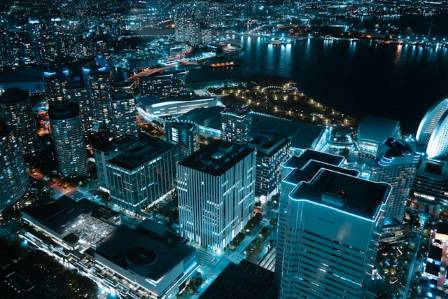
Oceanix Busan, South Korea
Floating urban developments have become an increasingly popular response to the challenges facing coastal cities, particularly rising sea levels. Oceanix Busan is one of the most prominent proposals because it has progressed beyond the conceptual stage toward the development of a physical prototype.
Oceanix worked with Bjarke Ingels Group and SAMOO on the design, while the city of Busan agreed to participate in developing the initial prototype. The concept was presented to the United Nations in April 2022 as a potential model for future floating communities.
The proposed settlement would use biorock, a material intended to support a self-sustaining and self-repairing structural system. Beyond creating additional urban space, the project aims to demonstrate how coastal communities could adapt to rising seas and other environmental pressures associated with climate change.
Chengdu Sky Valley, China
Designed by MVRDV, Chengdu Sky Valley was developed as a proposal for the Future Science and Technology City competition. Although the project is not currently moving ahead, its design provides an interesting example of how future development could coexist with existing rural landscapes.
Rather than replacing the area's traditional Linpan settlements, which are rural communities located throughout the valleys, the proposal sought to preserve and strengthen them. New structures would primarily be concentrated on elevated areas and hills, allowing the architecture to complement rather than overwhelm the existing valley landscape.
Protecting the agricultural environment would also give residents greater freedom in choosing how they live. The proposal included opportunities for self-built homes and more self-sufficient lifestyles, allowing people to maintain a closer relationship with the surrounding natural environment.
Amaravati, India
Although Foster + Partners' masterplan for Amaravati is no longer being developed as originally envisioned, the proposal remains an interesting example of how technology, sustainability and urban planning could be combined in a future city.
The design placed a major government complex at the heart of the city, while a substantial central green zone would extend through the urban core. The concept drew inspiration from locations such as Lutyens’ Delhi and New York’s Central Park.
Environmental performance was a major priority. The plan proposed that at least 60 percent of the city’s area would consist of greenery or water, creating a significant natural component within the metropolitan environment.
The proposal also incorporated a range of emerging technologies and sustainable transportation systems, including photovoltaic energy, electric vehicles, water taxis and dedicated cycling routes. Had the plan been realized, Amaravati was intended to become one of the world's more environmentally sustainable urban developments.
The Future of Urban Design
These projects demonstrate just how far contemporary architects and planners are willing to push the concept of the future city. Some prioritize dense, technology-driven environments, while others focus on restoring connections with nature or adapting to environmental challenges such as rising sea levels.
Not every proposal will ultimately become reality, and some have already been abandoned or delayed. Even so, these ambitious concepts provide valuable opportunities to rethink how cities could function, how people might move through them and how urban development can coexist with the natural environment.
Nearby projects

· en
Is Orange Juice Healthy? A Balanced Look at Its Benefits and Drawbacks
Fiona Blake
· en
Understanding the Amazon Tapir: The Forest’s Subtle Powerhouse
Edwin Tobias Montague
· en
Essential Techniques for Crafting Wire Sculptures
Noah Spencer Whitman
· en
James McNicholas: A Punchy Comedy Extravaganza
Charlotte Rose

· en
Our Top 10 Most Distinctive Coin Banks
Robert Williams
· en
16 Things to Know About Blazers for Women: Styles, Fits, and How to Wear Them
Lydia