Species Overview and Origins
Native to the islands of Japan and Taiwan, the sika deer (Cervus nippon) is a medium-sized deer species that has become firmly established in the UK following its introduction in 1860. Initially brought to Britain for private deer parks and aristocratic collections, these deer soon escaped or were intentionally released into the wild, finding favorable conditions to thrive in the country’s diverse landscapes. Unlike their native habitats in East Asia, where they inhabit temperate forests and mountainous regions, sika deer in the UK adapted to a range of environments, from dense woodlands to open heaths. Their successful colonization is attributed to their ecological flexibility, lack of natural predators, and ability to exploit available food resources—factors that have allowed their populations to expand steadily over the past century and a half. Today, the UK is home to one of the largest non-native sika deer populations in Europe, with distinct groups spread across Scotland, England, and Ireland.
Physical Characteristics and Seasonal Adaptations
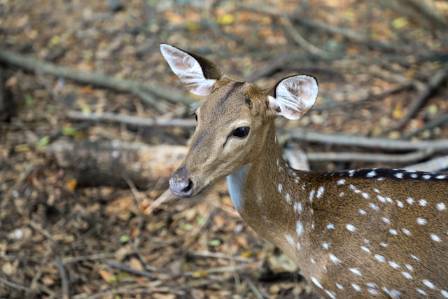
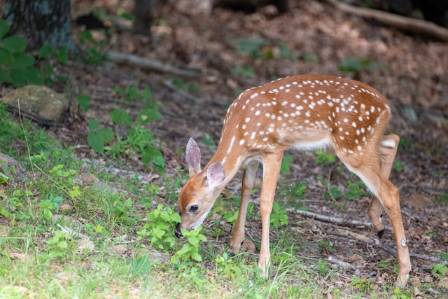
Sika deer exhibit striking seasonal variations in their appearance, a key adaptation to the UK’s changing climates. In summer, their coat is typically a rich chestnut brown, adorned with white spots that provide camouflage among leafy undergrowth—these spots fade as the seasons shift, giving way to a dense, almost pure grey winter coat that offers insulation against cold temperatures. A defining feature is the small white patch of fur beneath their short, bushy tail, outlined in black, which is visible year-round and serves as a visual signal to other deer. Stags (males) possess relatively simple antlers, usually with four points on each, which begin growing in spring, harden by autumn, and are shed annually in April or May. Females (hinds) lack antlers entirely and are slightly smaller than males. Adult sika deer stand between 80–120cm at the shoulder and weigh 40–60kg, with a lifespan of up to 15 years in the wild—though many young deer do not reach maturity due to environmental pressures.
Behavioral Traits
Sika deer are primarily solitary animals, though they may form small groups during the mating season or when food is abundant. They are crepuscular, meaning they are most active at dawn and dusk, and exhibit a strong sensitivity to human disturbance. This wariness leads them to avoid open areas during daylight hours, venturing into fields or clearings only under the cover of night to forage. One distinctive behavioral trait is their territorial marking: stags gouge deep, vertical grooves into the trunks of mature trees using their antlers, leaving scent from glands on their foreheads to signal their presence to other deer. While this behavior is a natural part of their social structure, it can cause significant damage to commercial forests, as the grooves weaken tree trunks and make them more susceptible to disease or breakage.
Reproductive Cycle
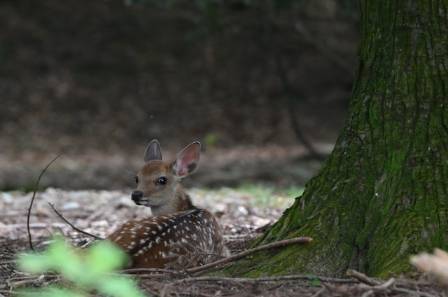
The mating season (rut) for sika deer occurs from late August to October, a period when stags become more vocal and aggressive as they compete for access to hinds. During this time, males emit a sharp, whistling call that can be heard up to 1km away—this distinctive sound serves to attract females and deter rival stags. After a gestation period of approximately 8 months, hinds give birth to a single fawn in May or June. Newborn fawns are born with a spotted coat that provides camouflage, and they remain hidden in vegetation for the first few weeks of life, relying on their mother’s milk for nourishment. Young deer become independent between 6–10 months of age, though they may stay close to their mother until the next breeding season. The survival rate of fawns is relatively low, with many failing to survive their first winter due to harsh weather and limited food resources.
Diet and Ecological Role
Sika deer are herbivores with a varied diet that adapts to seasonal availability. Their primary food sources include grasses, sedges, and heather—plants abundant in their woodland and heath habitats—along with fungi and tree bark. In summer, when fresh vegetation is plentiful, they graze on soft grasses and forbs, while in winter, they shift to browsing on bark, twigs, and evergreen foliage to compensate for the lack of green growth. Fungi play a crucial role in their diet, providing essential nutrients such as phosphorus and nitrogen that are scarce in plant material. As selective foragers, sika deer influence plant communities by controlling the growth of certain species, which can have cascading effects on other wildlife—for example, their browsing on heather may create open spaces for insects, which in turn support bird populations. However, their overgrazing can also lead to habitat degradation in areas with high deer densities.
Habitat Preferences
Sika deer are highly adaptable to different habitats, though they show a strong preference for coniferous woodlands and heathlands, as well as mixed and deciduous woodlands. Coniferous forests, such as those in Scotland’s Highlands, provide dense cover and a steady supply of food, while heathlands offer open areas for grazing alongside shelter from shrubs. In England, they are often found in coastal woodlands (e.g., along the south coast of Hampshire and Dorset) and upland regions like the Lake District, where the cool, moist climate mimics aspects of their native East Asian habitats. The key requirements for their habitat are access to cover (to avoid disturbance), a variety of food sources, and water—though they can survive in relatively dry areas by obtaining moisture from their diet. Their ability to thrive in both rural and semi-rural environments has contributed to their widespread distribution across the UK.
Predators and Survival Challenges
In the UK, sika deer have no natural predators, as native apex predators like wolves and bears were extirpated centuries ago. This lack of predation has allowed their populations to grow unchecked in many areas, but it also means that survival challenges are primarily environmental. The greatest threat to young deer is the harsh winter months, when exposure to freezing temperatures and starvation due to limited food can lead to high mortality rates. Fawns, in particular, are vulnerable because their small size and limited fat reserves make it difficult for them to withstand cold weather. Adult deer are more resilient, but they may still suffer from malnutrition during prolonged winters or in areas where habitat quality has declined due to overgrazing.
Threats and Management Strategies
While sika deer are not considered endangered in the UK, their expanding populations pose threats to both ecosystems and human activities. One major concern is hybridization with native red deer, as interbreeding can lead to the loss of pure sika deer genetics and alter the genetic diversity of red deer populations. Most sika deer populations in England and Scotland are now hybrids, with only a few purebred groups remaining—such as those in the New Forest (England) and around Peebles and Moray (Scotland). To address this, many populations are closely managed through methods like controlled culling, fencing to prevent movement between sika and red deer habitats, and monitoring of purebred groups. Additionally, their browsing can damage commercial forests and agricultural crops, leading to conflicts with landowners. Management strategies aim to balance the conservation of sika deer with the protection of native ecosystems and human interests.
Conservation Status and Population Distribution
In the UK, sika deer are classified as non-native but locally common. The GB population is estimated at 11,500, with 9,500 in Scotland and 2,500 in England. Ireland has a significantly larger population, ranging from 20,000 to 25,000. Over the past 20 years, their numbers have continued to increase, driven by their high reproductive rate, lack of predators, and adaptability to human-altered landscapes. In England, populations are concentrated along the south coast (Hampshire, Dorset), in the Lake District, and Lancashire, while Scotland’s populations are widespread across the Highlands and Lowlands. Notably, there are no established populations in Wales, likely due to a combination of unsuitable habitat and limited historical introductions. The remaining purebred populations are considered genetically valuable and are the focus of targeted conservation efforts to prevent further hybridization.
Fun Facts and Unique Traits
Sika deer are known for their vocal nature, especially during the mating season. Males’ sharp whistling calls are not only loud but also distinctive, allowing them to communicate over long distances. Beyond their calls, sika deer have several other unique traits: they are strong swimmers, capable of crossing rivers and even small stretches of sea, which has helped them colonize islands and coastal areas. Unlike many deer species, sika deer retain their spots into adulthood (though they fade in winter), a feature that sets them apart from native red deer. They also have a keen sense of smell and hearing, which helps them detect potential threats—even subtle signs of human presence. Another interesting fact is that their antlers are not just for territorial displays; they are also used for digging in snow to find food during winter, showcasing their adaptations to survive in the UK’s variable climate.