DIY note
How to Build the Perfect Tea Station
Almost every bed and breakfast I’ve visited has featured some sort of tea station for guests. It always feels like such a charming and indulgent detail, and I’m usually disappointed to leave that little luxury behind. Fortunately, creating the same kind of setup at home is much simpler than it may seem.
Nolan Carlisle
Maker
Bench tip
Read the full note below and keep tools nearby.
Shelf
Hobby build
Almost every bed and breakfast I’ve visited has featured some sort of tea station for guests. It always feels like such a charming and indulgent detail, and I’m usually disappointed to leave that little luxury behind. Fortunately, creating the same kind of setup at home is much simpler than it may seem.
Find the Right Spot
Before anything else, take a moment to decide where your tea station should go. Which area of your kitchen, dining space, or home office could be set aside for your tea routine? Depending on your layout, a convenient location might be beside the stove, close to an electric kettle, or next to a Keurig. Although I’m not particularly fond of K-cups, I’ve occasionally used my in-laws’ Keurig simply as a large water heater.
Think about everything you’ll want within reach. Your station may need room for mugs, teapots, tea infusers, teaspoons, sweeteners, and, naturally, your collection of teas. Choosing the location first will make the rest of the setup much easier.
Organize Your Tea Supplies
Once you’ve selected the location, gather everything you use to prepare tea and begin arranging it in a practical way. Bring all of your tea-related supplies together and determine the most convenient way to keep them organized.
There are plenty of household items that can double as attractive storage. Mugs, pitchers, glass jars, and even vintage silver cups can hold teaspoons, honey sticks, sugar packets, or tea infusers. Decorative containers and tins are especially useful for keeping different teas organized while also making them part of the display.
If you enjoy showing off your favorite cups, consider adding a mug tree or a wall-mounted rack for teacups and saucers. A narrow shelf or compact drawer unit can also be useful if you have enough room for one.
Take a look around your home and think creatively about what you already have available. You may discover that the perfect organizers are already sitting in another room.
Small to Medium Spaces
Limited counter space doesn’t mean you have to give up on the idea of a tea station. One of the best things about this setup is that it can be created in a surprisingly small area.
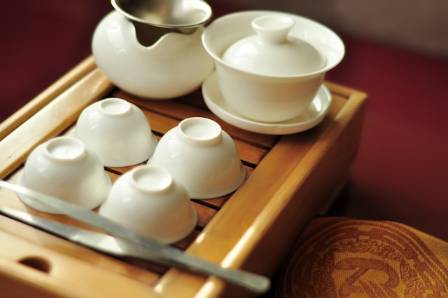
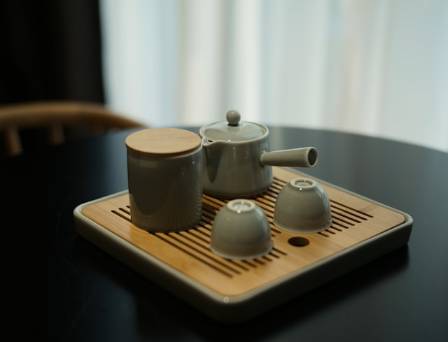
The easiest solution is to gather your essential tea supplies onto a decorative tray and position it beside your kettle. A tray keeps everything together, makes the station look intentional, and prevents your counter from becoming visually cluttered.
Another option is to make use of the narrow area between your countertop and upper cabinets. A tiered lazy Susan, a small dessert stand, or a compact freestanding shelf can create several levels of storage while taking up very little counter space. This makes it easier to keep tea, mugs, sweeteners, and accessories organized and accessible.
When countertop space is extremely limited, look upward instead. Your walls can provide valuable storage space. Install a few shelves for tea tins and infusers, or hang baskets to hold smaller supplies. Hooks are also excellent for displaying and storing mugs. If you have an attractive collection, an entire wall of hanging mugs can even become a decorative feature.
Medium to Large Spaces
If you have plenty of room available, or if your tea collection has gradually taken over a significant portion of your pantry like mine has, consider dedicating an entire piece of furniture to your tea station.
A hutch, dresser, compact sideboard, or bar cart can make an excellent tea-serving area. Drawers provide concealed storage for supplies you would rather keep out of sight, while shelves offer the opportunity to display beautiful teapots, cups, tins, and other accessories.
You can easily repurpose a piece of furniture you already own, giving it a fresh role in your home. Alternatively, creating a tea station can be a great excuse to explore antique stores, flea markets, or vintage markets in search of a unique piece with plenty of character.
If you have extra cabinet space in the kitchen, the shelves above or around your tea-making area can also become an efficient storage location. Tea boxes, mugs, and sweeteners can all remain close to the kettle. Closed cabinets are especially useful if you prefer a clean, uncluttered appearance, while baskets can keep open shelves looking neat and organized.
Once your tea station is functional, give it a little personality. If space allows, introduce a small lamp, a houseplant, or a piece of artwork to make the area feel warm and inviting. And, of course, keep a pretty tea towel nearby to complete the setup.
Nearby projects

· en
Historical and Industry Milestones of Audio Headphones
Jonathan Michael Stratford
· en
Create the Perfect Cozy Reading Nook
Lillian Ashford

· en
5 Remarkable Rainforest Trees and Their Importance
Amy White

· en
Scarlet Tanager: The Red Bird Hidden in the Forest
Lyra Beaumont

· en
Beijing’s giant bird’s nest
Callum Rhodes
· en
How Do Western and Asian Architectural Styles Differ?
Daniel Moore