← Back to bench3 min build note
DIY note
15 Facts About Alpacas
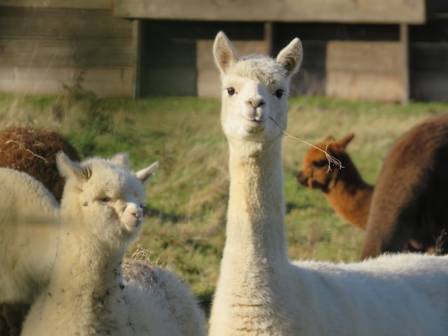
Alpacas are prey animals, not flock guardians. Their natural instincts make them more alert to predators; they aren’t well-suited to defending other animals.
J
James Turner
Maker
Bench tip
Read the full note below and keep tools nearby.
Shelf
Hobby build
Alpacas are prey animals, not flock guardians.
Their natural instincts make them more alert to predators; they aren’t well-suited to defending other animals.
Long gestation.
Alpacas carry their young (crias) for about 11.5 months (~335 days).
Not naturally therapeutic companions.
While some are used in therapy or as companion animals, that generally requires a lot of socialization and human intervention (bottle feeding, gentling). Wild or less handled alpacas tend to stay more reserved.
Gentle on fences and trees.
Alpacas are not jumpers; they tend to go under or through openings. They do nibble foliage that’s within reach.
Herbivorous and efficient digesters.
Their diet in captivity is mostly grass, hay, and sometimes fortified feeds. They have a three-compartment stomach (a trait of camelids) which helps them extract nutrients.
Communal dung piles.
Alpacas tend to use shared dung areas, which helps reduce parasite spread and maintain cleanliness in the rest of their living area.
Very social — need herd mates.
They’re herd animals; best kept in groups. Alpacas bonding with each other is important; being alone is stressful for them.
Good for regenerative agriculture.
Their soft padded feet, light grazing, and gentle behavior make them more ecosystem friendly, especially on hilly land or sensitive pastures.
Part of the camelid family.
Alpacas are related to llamas, camels, etc., domesticated in South America (Peru, Bolivia, Chile) with a long history.
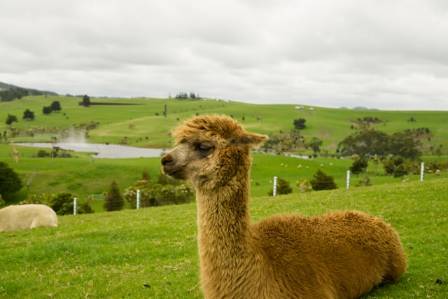
High-quality fiber.
Their fleece is lightweight, warm, soft, hypoallergenic, lighter and warmer than sheep’s wool in many cases, and naturally flame resistant. Excellent for yarns and high-quality textiles.
“Castration tooth” / tooth structure.
The article claims alpacas have only bottom teeth and a pad on top to mash food, and males have a special “castration tooth” used for biting others’ testicles to enforce dominance. However, this appears to be more anecdotal, possibly humor or exaggeration, not a widely documented scientific fact.
They spit, but not usually at humans.
Spitting is a natural behavior for alpacas — used in territorial disputes or to settle rank within the herd. It’s rarely directed at humans, but it can happen. The article notes that their spit is quite unpleasant.
Manure is excellent fertilizer.
Alpaca manure is “cold” manure — low in urea and not too odorous, so it can be used relatively directly in gardens.
Two types: Huacaya & Suri.
Alpacas come in two fleece styles:
Huacaya – fluffy, crimped fleece
Suri – silky, dreadlock-like fibers that hang down in locks.
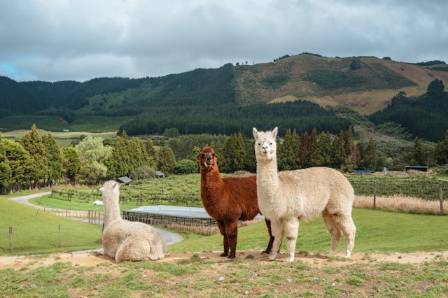
Valued by ancient civilizations.
Alpaca fiber was prized by the Incas and other Andean cultures; their fleeces were symbols of status and used for luxurious textiles.
Notes on Reliability & Context
Many of these facts are well supported by general alpaca husbandry sources (gestation period, fiber types, social needs, manure, diet, etc.).
Some bits (especially the “castration tooth” and perhaps the behavioral claims about spitting at humans or therapeutic roles) are more anecdotal or based on personal experience rather than peer-reviewed scientific literature.
As with many homesteading-style blog posts, the author mixes factual information with opinion, humor, and personal observation.
Nearby projects

· en
Thirteen Architectural Wonders Every Student Should Know
Audrey Foster

· en
Best American muscle cars of all time
Hugo Ford

· en
How to Make Japanese Oden
Cameron Reese

· en
Guide to Landscaping With Sandstone
Stellan Ford

· en
The Secret Angle: Why That "Deadrise" Number Matters More Than Cupholders
Lucas Brown

· en
All About Delphiniums (Larkspur)
Sophia Turner