DIY note
How to Make Japanese Oden
When cold weather settles in and the air turns crisp, nothing feels quite as soothing as a steaming bowl of Japanese oden. This classic dish, filled with a savory broth and a variety of ingredients, is a wintertime favorite across Japan. In this guide, you’ll learn how to recreate oden at home, bringing warmth and comfort to your table during the chilly season.
Cameron Reese
Maker
Bench tip
Read the full note below and keep tools nearby.
Shelf
Hobby build
When cold weather settles in and the air turns crisp, nothing feels quite as soothing as a steaming bowl of Japanese oden. This classic dish, filled with a savory broth and a variety of ingredients, is a wintertime favorite across Japan. In this guide, you’ll learn how to recreate oden at home, bringing warmth and comfort to your table during the chilly season.
What Is Oden?
Oden is a traditional Japanese dish made by gently simmering different ingredients in a soy-seasoned dashi broth. Its roots trace back to the Edo period, and over time it has become a beloved comfort food. Typically enjoyed from autumn through early spring, oden is commonly found in convenience stores, street stalls, and especially during New Year festivities.
The Cultural Meaning of Oden
More than just a dish, oden represents togetherness. It’s often shared among family and friends, gathered around a bubbling pot. Ingredients can differ depending on the region, with each area offering its own variation. This flexibility is part of what makes oden so appealing—you can easily tailor it to suit your preferences.
Essential Ingredients for Oden
Dashi Broth
At the core of oden is its flavorful dashi base. Made from kombu (seaweed) and bonito flakes, this broth delivers a deep umami taste that ties all the ingredients together.
Common Additions
While recipes vary, these ingredients are frequently used:
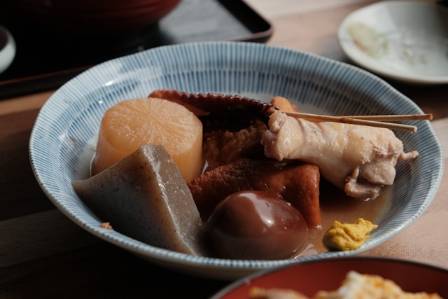
Daikon Radish: Mildly sweet and excellent at soaking up broth flavors
Konjac: A jelly-like yam product known for its unique texture and low calories
Chikuwa: A tube-shaped fish cake that absorbs the broth beautifully
Atsuage: Thick fried tofu pieces that become rich with flavor as they simmer
Eggs: Hard-boiled eggs that add richness
Ganmodoki: Fried tofu patties mixed with vegetables for extra heartiness

How to Make Oden at Home
Step 1: Make the Dashi
Soak a piece of kombu in cold water for about 30 minutes. Slowly heat it until just before boiling, then remove the kombu. Add bonito flakes, let simmer for around 5 minutes, and strain to create a clear, flavorful broth.
Step 2: Prepare Ingredients
Slice the daikon into thick rounds, boil the eggs, and cut the konjac into pieces. Lightly blanch fish cakes and tofu to remove excess oil and improve texture.
Step 3: Simmer Everything Together
Place all prepared ingredients into the dashi broth. Let everything cook gently for 1–2 hours. The longer it simmers, the richer and more blended the flavors will become.
Tips for Better Oden
Mix and Match Ingredients: Try seasonal produce or your personal favorites
Choose Fresh Components: Quality ingredients make a noticeable difference
Adjust Flavoring: Taste the broth and tweak with soy sauce, mirin, or sake as needed
Health Benefits
Oden can be a nutritious option, especially when focused on vegetables and tofu. It’s generally low in calories, and the broth provides hydration along with essential minerals—making it both comforting and wholesome during winter.
Final Thoughts
Preparing oden at home is a rewarding way to enjoy the colder months. Its rich flavors, warming nature, and cultural roots make it more than just a meal—it’s an experience. Whether shared with loved ones or enjoyed quietly on your own, oden brings a sense of comfort with every bite.
Now that you know how to make it, gather your ingredients, start simmering, and enjoy this timeless Japanese classic right from your own kitchen.
Nearby projects

· en
Industrial Robots Explained
James Wilson

· en
Top 10 Highest Peaks in the Alps
Marina Caldwell

· en
Amazing Nightstands That Always Work
Casey Vaughn

· en
Brown Bears: Characteristics and Differences Across Regions
Nicholas Evans

· en
Classic Muscle Cars Over a Hellcat
Samuel Cooper
· en
Mango Sago: Quick Creamy Hong Kong Dessert
Ember Sage