DIY note
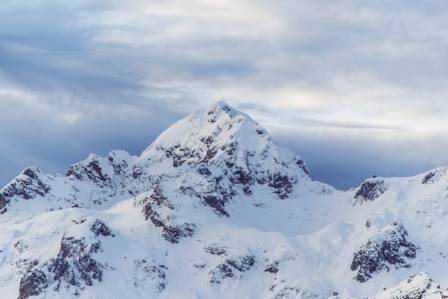
Top 10 Highest Peaks in the Alps
The Alps are one of Europe’s most celebrated mountain destinations, attracting visitors from around the globe for hiking, trekking, mountaineering, skiing, and many other outdoor pursuits.
Marina Caldwell
Maker
Bench tip
Read the full note below and keep tools nearby.
Shelf
Hobby build
The Alps are one of Europe’s most celebrated mountain destinations, attracting visitors from around the globe for hiking, trekking, mountaineering, skiing, and many other outdoor pursuits.
This enormous mountain system extends through eight countries: France, Monaco, Switzerland, Italy, Liechtenstein, Germany, Austria, and Slovenia. Almost all of the ten highest summits in the Alps are found in Switzerland, while Mont Blanc lies between France and Italy, and both Monte Rosa and Liskamm are shared by Switzerland and Italy. These spectacular peaks can be admired on a variety of mountain journeys throughout the region.
1. Mont Blanc
Rising to 4,804 meters (15,774 feet), Mont Blanc is the tallest summit in the Alps and the highest mountain in Europe. The massive peak forms part of the Graian Alps and is situated along the borders of France, Switzerland, and Italy. Surrounded by glaciers, it draws travelers and mountaineers from many parts of the world.
One of the most famous ways to experience the mountain is the Tour du Mont Blanc. Considered one of Europe’s most popular long-distance treks, this route circles the Mont Blanc Massif and takes hikers through three countries: France, Italy, and Switzerland. Along the journey, trekkers have numerous opportunities to appreciate the mountain from different perspectives.
2. Monte Rosa
Monte Rosa is not a single summit but an extensive massif containing several major peaks. Its highest point, Dufourspitze, rises to 4,634 meters (15,203 feet), making it the highest mountain in Switzerland. The massif lies in the eastern Pennine Alps along the Swiss-Italian frontier.
Other prominent summits within Monte Rosa include Dunantspitze at 4,632 meters, Grenzgipfel at 4,618 meters, and Nordend at 4,609 meters.
The challenging Tour de Mont Rosa circles the massif and crosses through both the Swiss and Italian Alps, providing impressive mountain scenery along the way. Another excellent viewpoint is Gornergrat, a high ridge overlooking more than twenty peaks above 4,000 meters as well as the Gorner Glacier. Travelers can reach this viewpoint from Zermatt by taking the Gornergrat Railway.
The first successful ascent of Monte Rosa was made on August 1, 1855, by a combined group of Swiss and English climbers. During summer, numerous mountaineers gather around the mountain with the goal of reaching its summit.
3. Dom
Situated close to Monte Rosa, Dom reaches an elevation of 4,545 meters (14,911 feet). The mountain can also be viewed from Gornergrat, making the ridge another useful location for taking in its impressive profile.
Among the Alps’ highest peaks, Dom is often regarded as one of the more accessible summits because its climbing routes are relatively direct. The mountain was first successfully climbed in 1858.
4. Liskamm
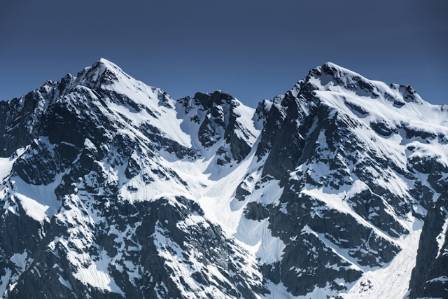
Liskamm rises 4,527 meters (14,852 feet) above sea level and forms part of the Pennine Alps on the border between Switzerland and Italy.
Its first successful ascent took place in 1861, when a 14-person climbing team reached the summit. Before that achievement, the mountain had gained a dangerous reputation because numerous climbers had fallen from the snow cornices that extend over its ridges. Liskamm is also notorious for avalanches and has long carried the nickname Menschenfresser, or “people eater.”
Conditions on the mountain can dramatically change the difficulty of an ascent, so climbers attempting Liskamm today need to pay close attention to weather and snow conditions before setting out.
5. Weisshorn
The Weisshorn stands near the Matterhorn in the Pennine Alps and reaches 4,506 meters (14,783 feet). Its striking appearance is worthy of recognition alongside the far more famous Matterhorn, yet the Weisshorn receives considerably fewer visitors.
Although it may be less well known among travelers, the mountain presents a serious challenge to climbers. Reaching the summit involves demanding technical climbing on both rock and snow, making the Weisshorn a particularly difficult objective for mountaineers.
6. Matterhorn
At 4,478 meters (14,692 feet), the Matterhorn is arguably one of the most recognizable mountain peaks on Earth. Its distinctive shape has become an iconic symbol of the Alps, and millions of visitors travel to Zermatt, Switzerland, each year simply to admire it.
The area around Zermatt offers numerous day hikes with spectacular views of the mountain. Another memorable way to encounter the Matterhorn is the Chamonix-Zermatt Haute Route, a 12-day trek beginning in Chamonix and finishing in Zermatt, with dramatic views of the peak along the way.
Since its first successful ascent in 1865, the Matterhorn has remained one of the most sought-after objectives in alpine mountaineering. Around 3,000 climbers attempt the mountain each year. While the technical difficulty is not considered extreme compared with some other major peaks, the route is highly exposed and vulnerable to rockfall. Anyone planning an ascent should therefore choose an experienced guide with extensive knowledge of the mountain.
7. Dent Blanche
Dent Blanche reaches 4,357 meters (14,295 feet) and is located in the Zermatt region. The mountain can be readily admired from Gornergrat, which provides a broad view of the surrounding high peaks.
The first successful ascent of Dent Blanche took place in July 1862. Despite its impressive appearance, the mountain is not an easy objective. It ranks among the more demanding summits above 4,000 meters in the Alps, requiring considerable climbing ability and experience.
8. Grand Combin
Located in the western section of the Pennine Alps, Grand Combin rises to 4,314 meters (14,154 feet). The mountain was first successfully climbed in 1859.
Grand Combin is considered a demanding alpine climb, with hazards including unstable icefalls and avalanches. These conditions make an ascent considerably more challenging and require climbers to carefully assess the mountain environment before attempting the summit.
9. Finsteraarhorn
The Finsteraarhorn is situated in Switzerland’s Bernese Alps and reaches 4,274 meters (14,022 feet) above sea level. Its distinctive summit can be seen from distances approaching 100 miles.
As the third most prominent mountain in the Alps, the Finsteraarhorn is surrounded by striking glaciers and steep rock faces. Despite its impressive scale and scenery, it attracts surprisingly fewer tourists than several of the Alps’ better-known peaks. The mountain was first successfully climbed in August 1857.
Several climbing routes lead toward the summit, with the normal route regarded as the easiest option. During winter, the mountain and surrounding area also become a popular destination for skiing.
10. Zinalrothorn
Standing at 4,221 meters (13,848 feet), Zinalrothorn occupies a position between the Weisshorn and the Matterhorn. Its location makes it another prominent peak that can be easily viewed from Gornergrat.
The first successful ascent took place in August 1864. Today, climbers are attracted to Zinalrothorn for its high-quality rock and the range of relatively straightforward routes available to the summit.
With its dramatic setting, challenging high-altitude terrain, and proximity to several famous Swiss peaks, Zinalrothorn forms a fitting final entry among the ten highest mountains of the Alps.
Nearby projects
· en
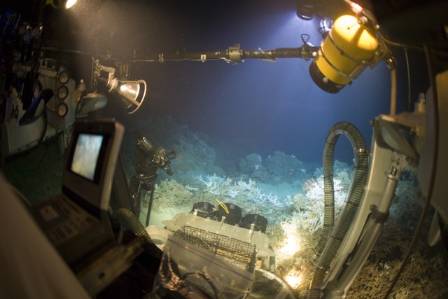
The first deep sea manned submersible
Daniel Woods
· en
Admire the snow-covered beauty of China
Elara Montgomery
· en
Submersibles for Deep Sea Exploration
Isella Corbin

· en
Top Desert Off-Road Vehicles
Jax Reed

· en
Interesting Facts About Ducks You May Not Know
Evan Taylor

· en
The Five Most Renowned Landmarks in France
Faith