DIY note
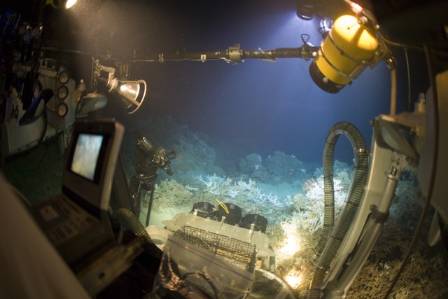
The first deep sea manned submersible
On January 23, 1960, the bathyscaphe Trieste set a historic record by reaching about 35,800 feet (over 10,900 meters) in the Challenger Deep, the deepest known point in the world’s oceans. The dive was completed by Jacques Piccard and U.S. Navy Lieutenant Don Walsh, marking the first confirmed human descent to such an extreme depth.
Daniel Woods
Maker
Bench tip
Read the full note below and keep tools nearby.
Shelf
Hobby build
On January 23, 1960, the bathyscaphe Trieste set a historic record by reaching about 35,800 feet (over 10,900 meters) in the Challenger Deep, the deepest known point in the world’s oceans. The dive was completed by Jacques Piccard and U.S. Navy Lieutenant Don Walsh, marking the first confirmed human descent to such an extreme depth.
The Challenger Deep lies within the Mariana Trench near Guam and reaches approximately 11,034 meters (36,201 feet). If Mount Everest were placed there, its summit would still remain more than 2,000 meters underwater.
The Evolution of Manned Deep-Sea Vehicles
Modern crewed submersibles trace their development through several key milestones. One of the earliest widely recognized research submersibles is Alvin, commissioned in 1964 by the Woods Hole Oceanographic Institution. It was capable of descending to around 6,000 feet and was designed for scientific missions on the seafloor.
Earlier concepts of underwater travel date back centuries. In the 1500s, William Bourne proposed early submersible designs, while Dutch inventor Cornelius Drebbel later refined similar ideas into practical prototypes. In 1776, American inventor David Bushnell built the Turtle, considered the first combat submarine with documented military use.
Modern Vehicles Reaching Extreme Ocean Depths
Recent decades have seen advanced submersibles push deeper than ever before.
Deepsea Challenger, designed in part by filmmaker James Cameron, was built for solo descent into the deepest parts of the ocean.
China’s Fendouzhe (Striver) has also reached depths close to 10,909 meters, demonstrating modern engineering capability in full-ocean-depth exploration.
These vehicles represent the cutting edge of pressure-resistant design and human deep-sea exploration.
Conditions at Extreme Ocean Depths
At great ocean depths, pressure increases dramatically—about 2,500 PSI per mile. Most vessels would be crushed instantly without reinforced hulls made of titanium or high-strength steel.
To survive such conditions, submersibles use a dual-structure system:
an outer shell for waterproofing and an internal pressure sphere that protects the crew from extreme external force.
Key Figures in Deep-Sea Exploration
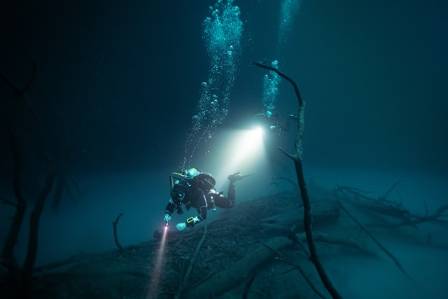
Deep-ocean science has been shaped by many influential explorers.
The Challenger Expedition (1872–1876), led by Charles Wyville Thomson, conducted the first systematic global ocean survey.
Jacques Cousteau revolutionized underwater exploration through diving technology and public ocean education.
In recent times, explorers like Victor Vescovo have reached the deepest points of all five oceans, expanding human understanding of the abyss.
Human Descents into the Deepest Point on Earth
On January 23, 1960, Don Walsh and Jacques Piccard became the first humans to reach the bottom of the Mariana Trench aboard Trieste. Their descent remains one of the most significant achievements in exploration history.
Only a very small number of manned missions have ever reached this depth, making Trieste a landmark in underwater engineering.
Types of Submersibles and How They Work
Deep-sea vehicles are generally classified as manned (HOVs) or unmanned systems.
Manned submersibles carry scientists and engineers directly to the ocean floor, while unmanned systems are controlled remotely or operate autonomously.
Early devices like the bathysphere were lowered by cables, while later bathyscaphe designs introduced independent propulsion and became the foundation of modern deep-sea exploration vehicles.
The Mariana Trench in Reality
The Mariana Trench stretches over 1,500 miles in a crescent shape across the Pacific Ocean, with an average width of about 43 miles. It forms a deep scar in the seafloor where extreme pressure, darkness, and cold define the environment.
Despite these harsh conditions, life still exists there, including amphipods, sea cucumbers, and microscopic organisms adapted to extreme pressure.
Conclusion
From early conceptual designs to modern full-ocean-depth vehicles, deep-sea submersibles represent a continuous effort to explore Earth’s final frontier. The Mariana Trench remains both a technological challenge and a powerful reminder of how much of our planet is still hidden beneath the ocean.
Nearby projects

· en
Top 10 Classic Salads (From Caprese to Grilled Chicken Salad)
Molly McArdle
· en
The difference between seals and sea lions
Coren Maddox
· en
Desert Pavement: A Unique Wind-Formed Landscape
Isabella Thornfield

· en
What Is Feather Reed Grass
Wren Foster

· en
How to Caer for China Roses
Caleb Rhodes

· en
Best Time to See the Milky Way + 2025 Milky Way Chart
Nico