← Back to bench2 min build note
DIY note
Parrots: The Intelligent and Colorful Birds of the World
Parrots are a large group of birds belonging to an order that includes more than 350 species.
L
Lucas Bennett
Maker
Bench tip
Read the full note below and keep tools nearby.
Shelf
Hobby build
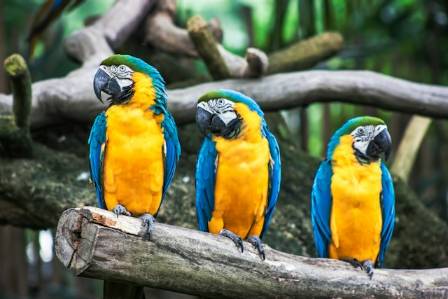
Parrots are a large group of birds belonging to an order that includes more than 350 species. This diverse group contains many familiar birds, including macaws, Amazon parrots, lorikeets, lovebirds, cockatoos, and numerous other species.
Common Characteristics
Although parrots display a remarkable variety of sizes, colors, and behaviors, they share several important features.
All parrots have a distinctive curved beak, which is specially adapted for handling different types of food. They are also zygodactyl birds, meaning each foot has four toes arranged in a unique pattern: two toes face forward and two point backward. This foot structure allows parrots to grip branches and hold food while eating.
Most parrots have a plant-based diet that includes:
fruits;
flowers;
buds;
nuts;
seeds.
Some species also consume small animals, such as insects, when available.
Parrots mainly inhabit warm regions around the world. The greatest variety of parrot species is found in Australasia, Central America, and South America, where tropical forests provide ideal habitats.
Popularity as Companion Birds
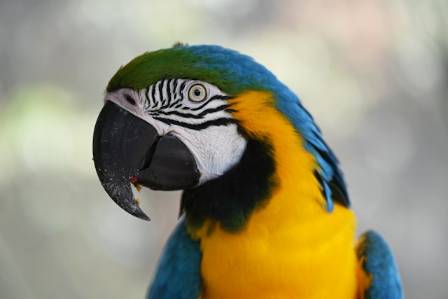
Parrots have been popular pets for centuries, especially species such as macaws, Amazon parrots, cockatiels, parakeets, and cockatoos.
Their popularity comes from a combination of unique qualities. They are known for being:
highly intelligent;
colorful and attractive;
social and charismatic;
capable of producing complex sounds.
Some parrots can imitate a wide range of noises, including human speech. Among all parrots, the African grey parrot (Psittacus erithacus) is considered one of the most skilled vocal mimics in the animal kingdom. These rainforest birds can reproduce human sounds with remarkable accuracy, making them famous for their communication abilities.
Threats and Conservation Challenges
Despite their popularity, many parrot species face serious threats from human activities.
The Convention on International Trade in Endangered Species (CITES) prohibits the commercial trade of wild-caught parrots, but demand for these birds has continued to fuel illegal wildlife trafficking.
Some parrot species have experienced severe population declines and are now endangered. Habitat destruction and illegal capture remain major challenges for their survival.
However, in some situations, introduced parrots have successfully established populations outside their original ranges. Birds that were once kept as pets have escaped or been released into the wild and created stable populations in new environments.
For example, the monk parakeet (green parakeet) has established wild populations in several parts of the United States, where it now lives as a non-native species.
Nearby projects

· en
Heavy Cream in Coffee: 3 Benefits & Recipes
Riley Harper

· en
What Is a Meadow Garden?
Samuel Adams

· en
Classic Muscle Cars Over a Hellcat
Samuel Cooper

· en
Desert Pavement: A Unique Wind-Formed Landscape
Isabella Thornfield

· en
How Fast Can Geese Fly: Speed and Endurance Facts
Lily

· en
The Tale of the Snake Plant
Maelin Frost