DIY note
Holographic AI: Better UI
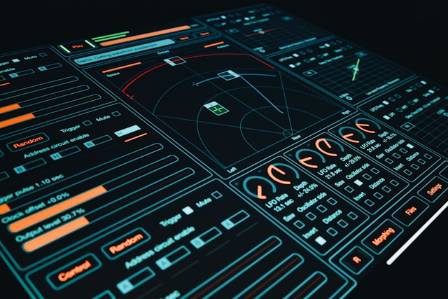
Think about those sci-fi movies where people manipulate floating digital panels in mid-air. What once felt fictional is now moving closer to reality through the rise of holographic user interfaces (UIs). These systems aim to project interactive digital content into real space, transforming how we engage with technology.
Liam Parker
Maker
Bench tip
Read the full note below and keep tools nearby.
Shelf
Hobby build
Think about those sci-fi movies where people manipulate floating digital panels in mid-air. What once felt fictional is now moving closer to reality through the rise of holographic user interfaces (UIs). These systems aim to project interactive digital content into real space, transforming how we engage with technology.
What Are Holographic UI Systems and How Do They Function?
Holographic UI refers to visual interfaces that appear to exist in three-dimensional space without a physical screen. Users can view and interact with digital content as if it is floating around them.
To achieve this effect, several optical and digital components work together:
1. Light Source
Used to project virtual displays such as floating menus or keyboards
Works with motion sensors to enable gesture-based interaction without touchscreens
2. Beam Divider
Helps generate multiple viewing angles of a single hologram
Enables 3D visuals that can be seen from different perspectives without special eyewear
3. Optical Mirrors
Redirect light to position holographic images within the user’s field of vision
Commonly used in AR headsets and projection-based display systems
4. Digital Objects
3D models appear as interactive holograms in the interface
Users can rotate, resize, or manipulate them using gestures or controllers
Useful in design, healthcare visualization, and virtual collaboration
5. Data Capture Layer
Modern systems rely on digital sensors instead of physical film
Enables real-time rendering and instant updates of holographic content
6. Reference Light System
Provides stability so holograms remain properly positioned in space
Essential for augmented and virtual reality alignment
7. Pattern Encoding Layer
Converts complex data into structured light patterns
Supports detailed and high-resolution 3D visualization
8. Reconstruction Light
Restores recorded patterns into visible 3D images
Allows users to interact directly with rebuilt holographic content
9. User Interaction Layer
The observer sees floating 3D visuals integrated into real surroundings
Interaction occurs through gestures, voice input, or movement
Everyday Uses of Holographic Interfaces
Gaming
Players experience fully immersive environments where 3D objects respond in real time.
Healthcare
Medical professionals can examine detailed anatomical structures in three dimensions during diagnosis or surgery.
Education
Students interact with lifelike 3D models, making complex topics easier to understand.
Retail
Shoppers can preview products in realistic 3D before making purchase decisions.
Communication
Virtual meetings may feature lifelike 3D representations of participants, improving remote interaction.
Technologies Required for Real-World Adoption
For holographic interfaces to become common, several technologies must advance:
Lightweight AR/MR headsets that feel like everyday eyewear
More natural gesture and voice recognition systems
Advanced 3D content creation tools for building holographic environments
These improvements will make interaction with digital objects feel as natural as handling real-world items.
AI-Driven Holographic Interfaces
After global supply chain disruptions caused by the pandemic, the semiconductor industry accelerated innovation in artificial intelligence hardware. This shift is pushing UI systems toward smarter, more adaptive holographic experiences.
Key computing technologies enabling this include:
GPUs (e.g., NVIDIA RTX, AMD Radeon) for real-time graphics and rendering
AI accelerators / ASICs (e.g., Google TPUs, Intel AI chips) for machine learning tasks
FPGAs (e.g., Xilinx, Intel solutions) for flexible system customization
High-performance CPUs (Intel Xeon, AMD EPYC) for data processing
DSP chips (Qualcomm Hexagon, Texas Instruments) for signal optimization
Neuromorphic processors (e.g., Intel Loihi) for brain-like adaptive computing
Fast memory systems (HBM, NVMe storage) for rapid data handling
Key Factors When Choosing Hardware
Developing holographic AI interfaces depends on several important considerations:
Processing power for real-time rendering
Energy efficiency for portable devices
Scalability to support different application sizes
System compatibility for smooth integration
The Future of Holographic Interaction
As artificial intelligence and semiconductor technologies continue to evolve, holographic user interfaces will become more responsive, realistic, and widely used.
In the near future, interacting with digital systems may feel less like using a device and more like engaging with a living spatial environment.
The era of holographic computing is approaching fast—and it is set to redefine how humans and machines communicate.
Nearby projects

· en
Submersibles for Deep Sea Exploration
Isella Corbin

· en
A Strategic Guide to Selecting the Ideal Roofing Design for Your Residence
Joan Margaret Ashbury

· en
Ostriches: Learn About This Giant Bird
Brian Wilson

· en
Unveiling the Hidden Perks of Pet Companionship: A Wellness Boost
Liam William

· en
How to Caer for China Roses
Caleb Rhodes

· en
The Ultimate Buyer's Guide for Outdoor Lounge Chairs
Landon Pierce