DIY note
Minimalist Home Decor Pieces Worth Buying
Minimalism is not about living in a completely bare room. It is about keeping the things that genuinely serve a purpose or bring you joy, while letting go of everything unnecessary. In practice, that can be much more difficult than it sounds.
Maren Whitlock
Maker
Bench tip
Read the full note below and keep tools nearby.
Shelf
Hobby build
Minimalism is not about living in a completely bare room. It is about keeping the things that genuinely serve a purpose or bring you joy, while letting go of everything unnecessary. In practice, that can be much more difficult than it sounds.
The most successful minimalist interiors are not cold or empty. Instead, they feel carefully considered. Every item has a reason for being there. There is no unnecessary decoration, no collection of things kept “just in case,” and no excess accessories taking up space simply for the sake of filling a room.
If you want to create a more minimalist home, this is a good place to begin. Look for pieces that feel useful rather than restrictive. The best choices combine practicality with a simple appearance and can make keeping your home tidy feel natural rather than like another chore.
Ceramic Vases That Look Sophisticated
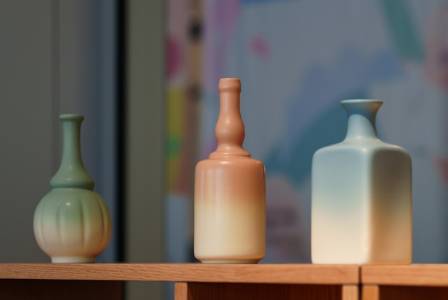
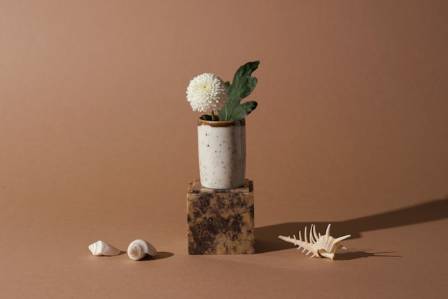
White, ivory, and cream-colored ceramics are classic elements of minimalist interiors. Their simplicity is intentional. A well-designed ceramic vase does not need elaborate decoration or complicated details. Its main purpose may be to display flowers, pampas grass, or dried stems, although it can also look beautiful completely empty. In this case, the silhouette and finish become the main attraction.
The Winter Shore collection of three ceramic vases is a good example. Arranged on a shelf, these pieces quietly complement their surroundings instead of competing with them. Their uncomplicated shapes and lack of patterns make them easy to incorporate into different rooms. At approximately €17.99 for three, they also offer an affordable way to introduce several coordinated decorative pieces without overwhelming the space.
If you prefer one larger arrangement, a collection of four beige ceramic vases can be useful for displaying pampas grass or dried botanicals. However, you don't necessarily need to fill them. Leaving decorative vessels empty is actually a common minimalist approach because the shape itself can provide enough visual interest. At around €19.99 for four pieces, the set offers plenty of flexibility.
Abstract Sculptures as Simple Decor
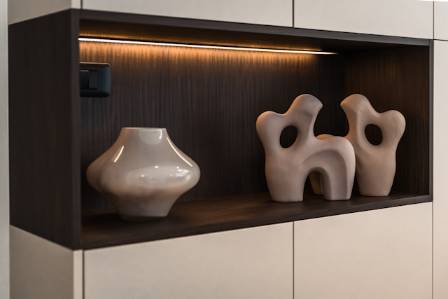
Wall art isn't always necessary to give a room personality. Sometimes a single sculptural object is enough. Modern abstract family figures, featuring simplified human silhouettes, can add character to a shelf, sideboard, or console without making the space feel busy.
Their appeal comes from their simplicity. Instead of relying on facial features or intricate details, these sculptures use basic forms and proportions to create an impression of people. Neutral shades such as beige, black, and cream make them especially easy to incorporate into a minimalist interior. They communicate an idea without demanding too much attention.
Wall Art With Plenty of Breathing Room
A minimalist home does not necessarily need completely bare walls. The goal is to avoid visual overload. One carefully selected piece can create interest while allowing the surrounding space to remain calm.
A white or cream relief artwork is particularly effective because it introduces texture and dimension without adding a strong visual pattern. It gives the wall something to offer without turning it into a focal point that dominates the entire room. Sometimes the most successful artwork is simply something that quietly exists within the space rather than demanding constant attention.
The Decision to Keep Things Simple
This is where minimalism becomes more interesting. At some point, choosing not to add something becomes just as deliberate as choosing to display an object. A room containing five carefully selected pieces can create an entirely different impression from one containing ten, even when both technically follow minimalist principles.
The important thing is to recognize that minimalism is an ongoing choice rather than a finished decorating style. Every time you decide to keep that simple white vase, you are making a conscious choice. Every time you decide not to purchase another piece of artwork, you are also making a decision. Neither choice happens automatically.
Take your time when creating a minimalist home. Add pieces gradually and choose objects that make you want to maintain the order and calm of the space around them. If something doesn't contribute to that feeling, consider whether it is worth keeping. After all, an unnecessary object doesn't only occupy physical space—it can also occupy your attention.