← Back to bench4 min build note
DIY note
Crab-eating Macaque: The Adaptable Monkey of Southeast Asia
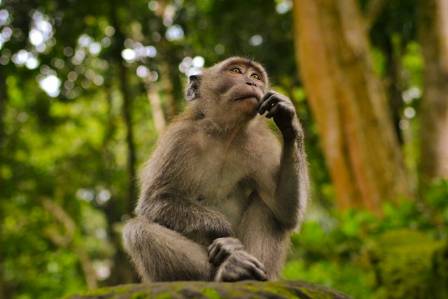
The crab-eating macaque, also known as the long-tailed macaque, is native to Southeast Asia and can be found across countries including Indonesia, Malaysia, Thailand, and the Philippines.
S
Stella
Maker
Bench tip
Read the full note below and keep tools nearby.
Shelf
Hobby build
Origins and Diverse Habitats
The crab-eating macaque, also known as the long-tailed macaque, is native to Southeast Asia and can be found across countries including Indonesia, Malaysia, Thailand, and the Philippines. Its range also extends to coastal regions of India and famous tropical islands such as Borneo and Sumatra.
These regions provide ideal living conditions, offering rich food supplies and thick vegetation for shelter. Coastal habitats such as mangrove forests are especially important, as they support a wide variety of plants and animals and provide excellent environments for these adaptable monkeys.
However, their ability to survive in different environments also allows them to enter areas influenced by humans. In cities and tourist destinations, crab-eating macaques often take advantage of easily available human food. While this adaptability helps them survive, it can also create conflicts when monkeys become too comfortable around people.
A Flexible and Resourceful Diet
Crab-eating macaques are omnivorous animals with a highly varied diet. They consume many types of food, including fruits, leaves, insects, and small aquatic animals.
Their common name comes from their ability to catch and eat crabs, especially in mangrove ecosystems. This behavior is unusual among primates and demonstrates their ability to exploit different food sources.
Their broad diet allows them to live successfully in many different habitats. However, in urban areas and tourist locations, their natural feeding patterns may be affected when they begin eating human waste, discarded food, or leftovers.
These monkeys also play an important ecological role. By eating fruits and spreading seeds through their droppings, they contribute to forest regeneration and help maintain plant diversity. Even when they interact with human environments, they remain valuable members of tropical forest and coastal ecosystems.
Social Structure and Reproduction
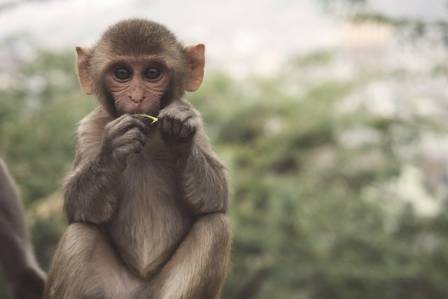
Crab-eating macaques are highly social animals and usually live in groups containing several dozen individuals.
Their societies follow a matrilineal hierarchy, meaning females form the core of the group and social relationships are mainly passed through the female line. Adult males usually leave their birth groups when they mature, which helps reduce inbreeding.
Social ranking plays an important role in maintaining group order. Hierarchy influences access to food, social interactions, and mating opportunities.
Female macaques usually give birth to a single infant after a pregnancy lasting about 165 days. Young monkeys are cared for by their mothers and the wider group. After being weaned at around one year old, they continue learning important survival skills through social interactions with other group members.
Relationship With Humans: Culture and Conflict
In some regions, crab-eating macaques have strong cultural significance and are protected because of traditional beliefs. In places such as Bali, these monkeys attract many visitors and have become an important part of local tourism.
However, close contact between humans and macaques can also create difficulties. Their intelligence and curiosity may lead them to enter human spaces, steal food, or interact aggressively with people.
They also face threats from hunting, capture, and exploitation for various human purposes.
Because of these challenges, managing the relationship between people and macaques has become increasingly important. Some protected areas and national parks have introduced education programs that encourage visitors to interact responsibly with these animals while protecting their natural behaviors.
Threats and Conservation Efforts
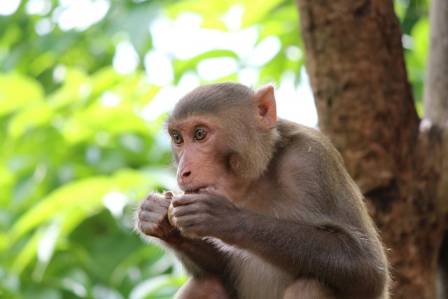
Although crab-eating macaques are currently listed as a species of Least Concern by the IUCN, they still face growing environmental pressures.
Major threats include:
Deforestation;
Loss of mangrove habitats;
Agricultural expansion;
Human development;
Habitat fragmentation.
As natural areas disappear, these monkeys are increasingly forced into smaller and more disturbed environments.
Conservation programs aim to protect their habitats while working with local communities. In Malaysia, for example, some projects focus on restoring mangrove ecosystems, which provide essential habitats for long-tailed macaques and many other native species.
A Species Connecting Nature and Human Society
With their intelligence, adaptability, and complex social behavior, crab-eating macaques represent the close relationship between wildlife and human environments.
Protecting these monkeys requires more than simply preserving individual animals. It also depends on conserving their habitats and developing ways for humans and wildlife to coexist peacefully.
These long-tailed macaques remind us that every species plays a role in maintaining healthy ecosystems, and protecting tropical forests is essential for ensuring a balanced future where both nature and human communities can thrive.
Nearby projects

· en
9 Essential Yoga Poses for Beginners to Boost Well-Being
Addison

· en
Essential Facts About the Diverse Sparrow Family
Kayla Richardson

· en
Holographic AI: Better UI
Liam Parker
· en
The World’s Only Completely Black Swan
Serin Blake

· en
The Ultimate Picnic Guide
Silas West

· en
The Thorny Shrub with Brilliant Red Berries
Coren Maddox