DIY note
Discovering 12 Details About Allen’s Hummingbird The Pacific Coast’s Bird That Resembles the Rufous Hummingbird
Allen’s Hummingbird is a tiny yet lovely bird species that is frequently confused with its close relative, the Rufous Hummingbird. Native to North America’s Pacific Coast, these small birds are true natural beauties, boasting unique traits and behaviors that distinguish them from other hummingbird varieties. In this piece, we will explore 12 facts about Allen’s Hummingbird, shedding light on their physical appearance, living environments, actions, and conservation status. Whether you’re a bird lover or just curious about these amazing birds, you’re sure to find something fascinating here.
William Hughes
Maker
Bench tip
Read the full note below and keep tools nearby.
Shelf
Hobby build
Allen’s Hummingbird is a tiny yet lovely bird species that is frequently confused with its close relative, the Rufous Hummingbird. Native to North America’s Pacific Coast, these small birds are true natural beauties, boasting unique traits and behaviors that distinguish them from other hummingbird varieties. In this piece, we will explore 12 facts about Allen’s Hummingbird, shedding light on their physical appearance, living environments, actions, and conservation status. Whether you’re a bird lover or just curious about these amazing birds, you’re sure to find something fascinating here.
What are the most interesting facts about Allen’s Hummingbird?
Allen’s Hummingbird is a small, colorful bird species that calls the Pacific Coast of North America home. It is well-known for its extraordinary flying skills—such as being able to hover in place and fly backward—as well as its tendency to defend its territory and its special adaptations that help it thrive in coastal habitats. Now, let’s take a closer look at 12 captivating facts about Allen’s Hummingbird.
Distinctive Appearance
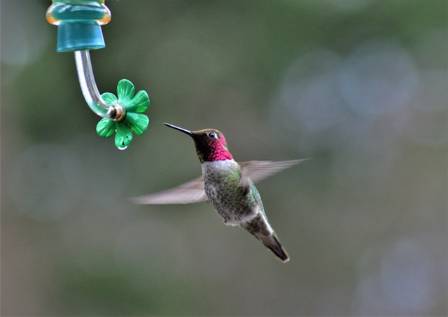
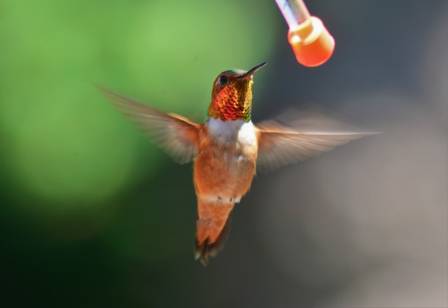
Allen’s Hummingbird is a small bird, measuring roughly 8 to 9 centimeters in length and weighing a mere 2 to 4 grams. Male Allen’s Hummingbirds have a striking look, featuring an iridescent copper-red throat (known as a gorget), a green back and crown, and rufous-colored sides, rump, and tail. Females and young Allen’s Hummingbirds are less vivid in color; they have a green back and pale rufous sides. It’s worth noting that telling Allen’s Hummingbirds apart from Rufous Hummingbirds can be tricky. Some Allen’s Hummingbirds also have rufous backs, though they usually have a green back, which is a key point for identification.
Limited Range
Unlike certain hummingbird species that have wide-ranging habitats, Allen’s Hummingbird has a relatively restricted distribution. It mainly breeds along a narrow stretch of the Pacific Coast, from southern Oregon down to southern California. Some groups of these birds are year-round residents on the Channel Islands, which are located off the coast of southern California. During the winter months, they migrate to central Mexico. The migratory subspecies, known as Selasphorus sasin sasin, travels between the Pacific Coast and central Mexico. In contrast, the non-migratory subspecies, Selasphorus sasin sedentarius, is mostly found throughout the year on the Channel Islands and parts of mainland California.
Impressive Flying Abilities
Allen’s Hummingbirds are like aerial acrobats, with a range of impressive flying skills. They can hover steadily in mid-air, fly backward with ease, and reach speeds of up to 90 kilometers per hour when performing courtship dives. Even during normal flight, their wings beat at an amazing rate of about 70 times every second.
Unique Courtship Display
Male Allen’s Hummingbirds put on a complex and elaborate courtship show to attract female birds. They climb up to 30 meters into the air, then dive sharply toward the ground. At the very last moment, they pull up, and the rapid movement of air over their tail feathers creates a loud chirping sound. This display is often paired with a shuttle display, where the male flies quickly back and forth right in front of the female.
Tiny Nests
Female Allen’s Hummingbirds build nests that are surprisingly small—about the size of a walnut shell. These nests are made using plant fibers, spider webs, and lichens. They are often camouflaged to blend in seamlessly with their surroundings, which helps protect them from predators. Typically, the nests are placed on a downward-sloping branch, a location that offers protection from rain.
Rapid Heartbeat
These small birds have an extremely fast metabolism, and this is reflected in their heart rate. When at rest, their heart beats around 480 times per minute. But when they are flying, this rate can jump to an astonishing 1,260 beats per minute, showing just how much energy their bodies use during flight.
Specialised Diet
The diet of Allen’s Hummingbirds is specialized to meet their unique needs. It consists mainly of nectar from flowers, which serves as their primary source of energy. They also eat small insects and spiders, which provide them with essential protein. Their long, thin beaks and extendable tongues are perfectly suited for reaching the nectar that lies deep inside flowers.
Territorial Behaviour
Even though they are small in size, Allen’s Hummingbirds are known for being aggressively territorial. Male birds fiercely defend their feeding areas and nesting spots. They often chase away other hummingbirds, no matter what species those birds belong to. This behavior is important because it helps ensure that the males have access to the vital food resources they need to survive and reproduce.
Torpor State
To save energy, especially during cold nights, Allen’s Hummingbirds can enter a state called torpor. When in this state, their body temperature drops, and their heart rate and breathing slow down significantly. This allows them to use up to 50 times less energy than they do when they are awake and active, helping them get through periods when food might be scarce or conditions are harsh.
Subspecies
There are two recognized subspecies of Allen’s Hummingbird. The first is Selasphorus sasin sasin, the migratory subspecies that breeds along the Pacific Coast. The second is Selasphorus sasin sedentarius, the non-migratory subspecies that is found on the Channel Islands and parts of mainland California throughout the year.
Conservation Status
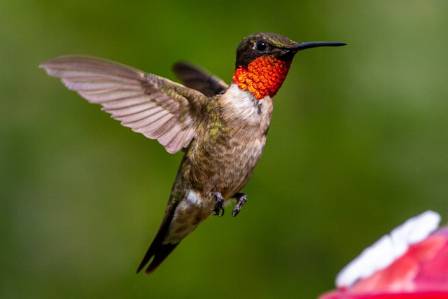
While Allen’s Hummingbird is not currently classified as a threatened species, there are growing concerns about its future. One major threat is habitat loss caused by urban development, as more and more natural areas are converted into cities or towns. Climate change is also a worry, as it may disrupt the timing of the birds’ migration and reduce the availability of the flowers and insects they depend on for food. In California, the species is listed as a “Species of Special Concern,” which means it faces potential risks that require ongoing monitoring to ensure its survival.
Named After Charles Andrew Allen
This bird species was named in honor of Charles Andrew Allen, an American collector and taxidermist. Allen discovered the bird in the 1870s in California, and his work in identifying and documenting the species led to it being named after him.
Final Thoughts
Allen’s Hummingbird, with its bright and lively colors, amazing flying abilities, and unique adaptations, is truly a wonder of nature. From its extremely fast heart rate to its ability to enter a state of torpor, these small birds never fail to captivate scientists and bird enthusiasts alike. As we have learned, these remarkable birds face challenges such as habitat loss and the impacts of climate change. It is crucial that we take action to protect their natural habitats and ensure that they can survive and thrive for future generations to appreciate and enjoy.
Nearby projects

· en
Essential Italian Gastronomy: 10 Iconic Pasta Dishes
Julian Weatherby

· en
From Sea to Shining Sea
Kaia Bennett

· en
Most Incredible Sea Cliffs In The World
Logan Pierce
· en
Dromedary Camel: The Desert Survivor With One Hump
Charlotte Morgan

· en
History of the Phonograph
Stella Collins

· en
Best Time to Visit Eiffel Tower
Monica