DIY note
The Rise of the Petronas Towers
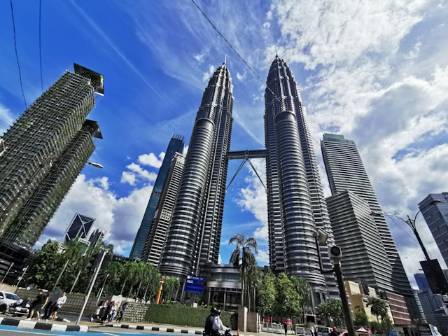
On April 15, 1998, the Council on Tall Buildings officially recognized the Petronas Towers as the tallest buildings in the world, marking the transfer of the title to Asia. The achievement represented a major milestone for Kuala Lumpur and demonstrated the city’s growing importance on the global stage.
Mason Sterling
Maker
Bench tip
Read the full note below and keep tools nearby.
Shelf
Hobby build
On April 15, 1998, the Council on Tall Buildings officially recognized the Petronas Towers as the tallest buildings in the world, marking the transfer of the title to Asia. The achievement represented a major milestone for Kuala Lumpur and demonstrated the city’s growing importance on the global stage.
The project was developed by a partnership between private investors, the Malaysian government, and Petronas, Malaysia’s national petroleum company. Although the original goal was not specifically to exceed Chicago’s Sears Tower, the developers wanted to create a landmark that would establish Kuala Lumpur as a leading center for business, culture, and international recognition.
American architect Cesar Pelli provided the vision for the project with a design featuring two graceful towers of remarkable proportions. With a slenderness ratio of 9.4, the towers achieved an elegant appearance while becoming a structure capable of capturing worldwide attention.
Architecture Inspired by Malaysian Heritage
The design of the Petronas Towers was created to represent Malaysia’s cultural identity and heritage. Pelli incorporated elements inspired by Islamic architecture, using repeated geometric patterns and traditional design principles.
The floor plan is based on an eight-point star created by overlapping squares, a clear reference to Islamic artistic traditions. Curved sections and pointed edges shape the exterior facade, creating a decorative appearance reminiscent of traditional temple towers.
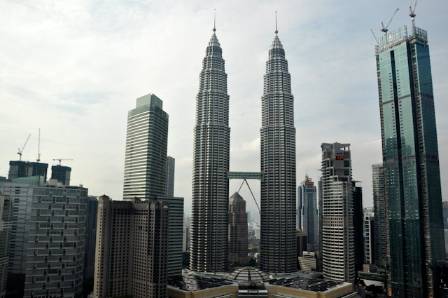
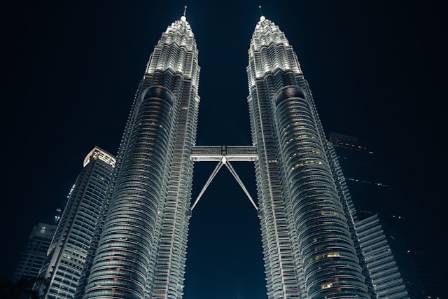
The two identical towers are connected by a sky bridge on the 41st floor, forming a dramatic architectural gateway that has become one of Kuala Lumpur’s most recognizable features.
Advanced Structural Engineering
The towers were constructed using high-strength reinforced concrete, a material widely used by Asian construction teams and particularly effective in reducing movement caused by wind. Compared with steel structures, concrete provided twice the efficiency in controlling sway.
Each tower is supported by a massive concrete core measuring 75 by 75 feet, combined with an outer framework of widely spaced super columns. This advanced structural system allows the buildings to maintain their slim appearance while providing flexible office areas ranging from approximately 14,000 to 22,000 square feet per floor without interior columns.
Innovative Features and Public Spaces
The Petronas Towers include a number of advanced design features that improve both performance and visitor experience. The exterior curtain wall combines glass panels with stainless steel sun shades, helping reduce the impact of intense tropical sunlight.
A double-level elevator system was introduced to efficiently transport the thousands of employees and visitors who use the complex every day. The system includes a transfer area at the sky lobby on the 41st floor.
Beyond office functions, the development also includes a mixed-use base containing a concert hall and shopping center. Surrounding the towers are nearly seventy acres of landscaped public parks and plazas, creating an open urban environment for residents and visitors.
A Landmark Representing Malaysia’s Future
The Petronas Towers successfully combine engineering innovation with cultural expression. They reflect Malaysia’s historical traditions while also representing the country’s ambition, economic growth, and modernization.
According to Cesar Pelli, the towers were not designed to be exclusively Malaysian in style, but they have become permanently connected with the identity of Kuala Lumpur. Today, they stand as one of the world’s most recognizable architectural symbols and a powerful representation of the city’s transformation.
Nearby projects

· en
What Is a Meadow Garden?
Samuel Adams
· en
How Do Western and Asian Architectural Styles Differ?
Daniel Moore

· en
These Beaches Boast the World’s Bluest Waters
Natalie Evans
· en
How to Make a Pixel Art Cat
Ryan Cooper

· en
Ostriches: Learn About This Giant Bird
Brian Wilson

· en
Fostering Positive Vibes: 5 Plants to Elevate Your Home's Energy
Charlotte Ivy