DIY note
Industrial Robots Explained
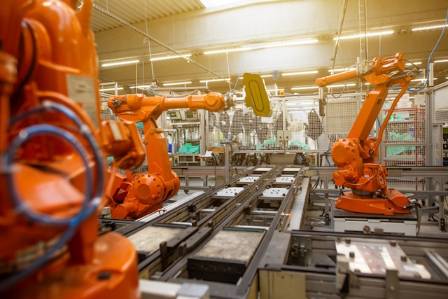
In today’s rapidly changing manufacturing world, industrial robots have become a driving force behind innovation. Far beyond simple tools, these machines significantly boost efficiency, accuracy, and output. This article explores industrial robotics in detail, including their definitions, types, uses, advantages, challenges, and future trends.
James Wilson
Maker
Bench tip
Read the full note below and keep tools nearby.
Shelf
Hobby build
In today’s rapidly changing manufacturing world, industrial robots have become a driving force behind innovation. Far beyond simple tools, these machines significantly boost efficiency, accuracy, and output. This article explores industrial robotics in detail, including their definitions, types, uses, advantages, challenges, and future trends.
What Is Industrial Robotics?
Industrial robotics involves using automated machines in production environments to handle tasks that are repetitive, risky, or demand high precision. These robots are used in settings ranging from factory assembly lines to distribution centers. With advanced technologies built in, they help streamline operations and lower costs, transforming how goods are produced and delivered.
Core Definition and Key Parts
An industrial robot is essentially a programmable system that can perform tasks automatically. Its main components include:
Manipulator: The robotic arm that carries out actions, often fitted with tools or grippers.
Controller: The control unit that processes commands and directs movements.
Sensors: Devices that detect environmental changes and provide feedback for adjustments.
Together, these elements enable robots to execute complex operations quickly and precisely. Advances in AI and machine learning are further enhancing their ability to adapt, learn, and improve performance over time.
Different Types of Industrial Robots
Industrial robots come in various forms, each suited to specific tasks:
Articulated Robots: Flexible arms with multiple joints, ideal for welding, painting, and similar work.
SCARA Robots: Designed for high-speed, precise assembly tasks.
Cartesian Robots: Operate along linear axes, commonly used for pick-and-place functions.
Collaborative Robots (Cobots): Built to safely work alongside humans in shared spaces.
Each type offers distinct advantages, allowing manufacturers to select the best option for their production needs. For example, articulated robots are common in automotive plants, while cobots are popular among smaller businesses due to their ease of use and affordability.
Where Industrial Robots Are Used
Automotive Manufacturing
The automotive industry has long relied on robotics. Robots handle welding, painting, and assembly with high consistency, improving both speed and quality. They also manage heavy parts and hazardous tasks, reducing injury risks and enabling higher production volumes.
Electronics Production
Precision is critical in electronics manufacturing. Robots assemble delicate components, perform soldering, and conduct testing with extreme accuracy. This ensures reliable product performance while speeding up production to meet global demand. Modern systems often include collaborative robots that work alongside humans for complex tasks.
Food and Beverage Processing
In this sector, robots are used for packaging, sorting, and palletizing. Their ability to maintain hygiene standards makes them ideal for handling food. They also operate faster than human workers, keeping production lines efficient. Advanced vision systems allow robots to inspect product quality and ensure compliance with safety regulations.
Advantages of Industrial Robots
Higher Productivity
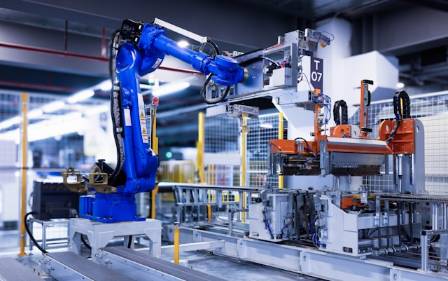
Robots can run continuously without rest, leading to increased output. Their speed and precision reduce production time and improve overall efficiency.
Lower Costs Over Time
Although the initial investment can be high, robots reduce long-term labor expenses and minimize waste. Fewer errors mean less rework, which further cuts costs.
Enhanced Safety
Robots take over dangerous tasks, such as handling heavy equipment or hazardous materials. This reduces workplace accidents and improves overall safety. Collaborative robots also make human-robot interaction safer.
Challenges to Consider
Upfront Costs
Purchasing and installing robotic systems requires significant capital, which can be difficult for smaller companies. Careful cost-benefit analysis is essential.
Workforce Training
Employees need new skills to operate and maintain robotic systems. Training programs are necessary to bridge this gap and ensure smooth adoption.
Maintenance Needs
Robots require regular servicing to function properly. Unexpected breakdowns can disrupt production, so companies must plan for maintenance and downtime.
The Future of Industrial Robotics
Artificial Intelligence Integration
AI is making robots smarter and more adaptable. They can learn from experience, adjust to new tasks, and improve efficiency. AI also enables predictive maintenance and real-time decision-making.
Growth of Collaborative Robots
Cobots are becoming increasingly popular because they enhance human work rather than replace it. Their safety features allow them to operate closely with workers, improving productivity in a balanced way.
Sustainable Manufacturing
Robots contribute to greener production by reducing waste, energy use, and emissions. Their efficiency supports environmentally friendly manufacturing practices.
Conclusion
Industrial robotics is transforming manufacturing by improving efficiency, safety, and sustainability. While challenges exist, ongoing technological advancements continue to expand their potential. As adoption grows, robots will play an even greater role in shaping the future of production.
For small and medium-sized businesses looking to embrace automation, solutions like BeezBot offer practical, cost-effective options. By adopting such technologies, companies can enhance productivity, improve safety, and move toward a more sustainable manufacturing future.
Nearby projects

· en
The best viewing spot in one of the three cities with the most beautiful night views
Michael Williams

· en
Sika Deer: Ecology, Distribution, and Conservation in the UK
Owen

· en
Expressive Watercolor Landscape Collage
Caleb Finn

· en
5 Remarkable Rainforest Trees and Their Importance
Amy White

· en
Beijing’s giant bird’s nest
Callum Rhodes

· en
Top ten spacecraft
Riven Calder