DIY note
Stunning natural wonders in the Middle East
When many people imagine the Middle East, endless desert landscapes and golden sand dunes are often the first images that appear. While the region certainly has some breathtaking deserts worth exploring, its natural beauty extends far beyond sand. The Middle East is also home to salt-covered lakes, colorful valleys, unusual rock formations, and landscapes so extraordinary that they seem to belong in a fantasy story or even on another planet. Here are some of the most remarkable natural wonders found throughout this fascinating region.
Amelia Brooks
Maker
Bench tip
Read the full note below and keep tools nearby.
Shelf
Hobby build
When many people imagine the Middle East, endless desert landscapes and golden sand dunes are often the first images that appear. While the region certainly has some breathtaking deserts worth exploring, its natural beauty extends far beyond sand. The Middle East is also home to salt-covered lakes, colorful valleys, unusual rock formations, and landscapes so extraordinary that they seem to belong in a fantasy story or even on another planet. Here are some of the most remarkable natural wonders found throughout this fascinating region.
Fairy-Tale Rock Towers in Turkey
Around 30 million years ago, ancient volcanoes erupted across the region that is now central Turkey, covering the land with layers of ash. This volcanic material eventually hardened into tuff, a soft rock formed from compressed volcanic particles.
Over millions of years, wind, rain, and erosion slowly shaped this fragile stone. The softer layers disappeared, leaving behind tall, narrow pillars topped with stronger rock such as basalt. These unusual formations became known as the fairy chimneys of Cappadocia, creating one of the most magical landscapes in the world.
Salt Mountains, Sculpted Rocks, and Colorful Valleys in Iran
Located in the Persian Gulf, Hormuz Island may be small, but its geological wonders are enormous. Covering only about 16 square miles, this island contains an incredible variety of natural landscapes created by millions of years of geological activity.
Instead of man-made skyscrapers, the island’s skyline is formed by mountains and salt domes. These impressive structures were created when large deposits of rock salt pushed upward through layers of the Earth’s surface.
Exploring deeper into the island reveals a natural art gallery. The Valley of Statues features rocks that have been shaped by erosion into strange and imaginative forms, while Rainbow Valley displays a stunning palette of colors, including red, orange, white, blue, and purple, created by different minerals within the ground.
A Hidden Green Oasis in the Saudi Desert
The Jebel Qaraqir plateau in Saudi Arabia features a dramatic canyon landscape filled with towering cliffs and rugged rock formations. The massive sandstone walls are so impressive that visitors and vehicles appear tiny in comparison.
However, the true surprise of this desert environment is the life created by a natural spring-fed stream. The flowing water supports patches of green vegetation, including grasses, shrubs, and palm trees, creating a striking contrast against the surrounding orange and golden sandstone.
This unexpected oasis demonstrates how water can transform even the harshest desert landscapes into places full of life.
The World’s Deepest Hypersaline Lake
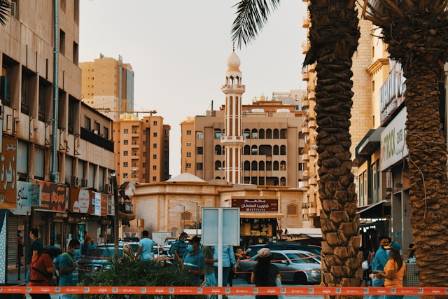
The Dead Sea, located at the lowest point on Earth between Jordan, Israel, and the Palestinian territories, is famous for its extraordinary salt concentration. The extremely high salinity allows people to float naturally on the water’s surface and has made the lake famous for its mineral-rich properties.
At the same time, the harsh conditions make survival difficult for most aquatic life. Fish, plants, and many other organisms cannot live there, although certain bacteria and microorganisms can survive.
Freshwater from rivers and underground springs continues to flow into the lake, but because there is no outlet, minerals and salt remain behind as water evaporates under the intense Middle Eastern sunlight. This ongoing process has created one of the planet’s most unique natural environments.
The Ever-Changing Caves of Lebanon
Hidden just north of Beirut, Jeita Grotto is one of Lebanon’s most spectacular natural attractions. Although the entrance area may appear modern, the true wonder begins deep underground.
Inside the cave system, visitors can admire enormous limestone formations, including hanging stalactites, rising stalagmites, stone curtains, and natural columns that create the feeling of entering an underground cathedral.
When water conditions allow, visitors can take a peaceful boat ride through the lower cave, entering a quiet underground world surrounded by reflections on the water. The caves contain remarkable formations, including towering structures that resemble famous landmarks, and some formations continue to grow today while others were created thousands of years ago.
The Middle East’s Mars-Like Landscape
Jordan’s Wadi Rum is a vast desert valley known for its dramatic red sands and towering sandstone formations. Massive rock pillars rise from the desert floor, shaped over countless years by wind, sand, and occasional floods.
Walking through this landscape can feel like stepping onto another planet. The scenery is so otherworldly that Wadi Rum has been used as a filming location for extraterrestrial environments, including the surface of Mars in The Martian and the fictional moon Jedha in Rogue One: A Star Wars Story.
Beyond its natural beauty, the area is also home to Bedouin communities who live among the remarkable desert surroundings.
Endless Sand Seas of the Empty Quarter
The Rub al Khali, also known as the Empty Quarter, is the largest continuous sand desert on Earth. Its enormous size and extreme conditions have made it one of the most remote and challenging environments on the planet.
Covering approximately 255,000 square miles, this vast desert stretches across much of the Arabian Peninsula. Most of it lies within Saudi Arabia, while other portions extend into Oman, the United Arab Emirates, and Yemen.
The desert’s famous red sands were likely shaped by ancient river channels, while some lighter-colored sands may have originated from deposits near the Persian Gulf. Today, powerful winds continue to reshape the landscape, creating stunning dune formations such as towering star dunes and elegant crescent-shaped barchan dunes.
The Empty Quarter represents the timeless beauty and powerful forces of nature, offering one of the most unforgettable desert experiences anywhere in the world.
Nearby projects
· en
Top 7 Most Beautiful Islands in the World
Eden Clarke
· en
The Thorny Shrub with Brilliant Red Berries
Coren Maddox
· en
What Is a Meadow Garden?
Samuel Adams
· en
Take in the View From 6 of the World’s Tallest Sea Cliffs
Penelope Sanchez

· en
Top 3 Theme Parks
Ava
· en
Top 10 Highest Peaks in the Alps
Marina Caldwell