DIY note
The Industrial Reality of Humanoid Robotics: Definitions and Practical Applications
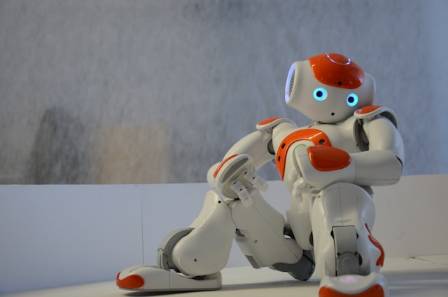
A humanoid robot is an autonomous machine engineered with a physical structure and functional capabilities modeled after the human body. This design allows these systems to operate effectively within environments originally built for people without requiring extensive structural modifications. As global labor shortages put pressure on traditional manufacturing, humanoid robots are emerging as a versatile solution to automate complex, unstructured tasks that were previously the sole domain of human workers.
Douglas Fenwick
Maker
Bench tip
Read the full note below and keep tools nearby.
Shelf
Hobby build
A humanoid robot is an autonomous machine engineered with a physical structure and functional capabilities modeled after the human body. This design allows these systems to operate effectively within environments originally built for people without requiring extensive structural modifications. As global labor shortages put pressure on traditional manufacturing, humanoid robots are emerging as a versatile solution to automate complex, unstructured tasks that were previously the sole domain of human workers.
While the concept of a human-shaped machine often captures public imagination through media headlines, the industrial sector is increasingly focused on a more pragmatic question: what specific value can these robots provide in a modern factory setting?
Key Characteristics Defining the Humanoid Form
To distinguish a humanoid robot from other types of automation, industry experts highlight three fundamental pillars of their design. These features are not merely aesthetic; they are functional requirements for navigating a world designed for humans.
Bipedal Structure and Dexterous Manipulation
The two-armed, two-legged configuration allows a robot to intuitively interact with its surroundings. By utilizing human-scaled tools and navigating infrastructure such as staircases or narrow corridors, these robots minimize the need for the expensive environmental retrofitting often required by wheeled or stationary industrial robots.
Advanced Coordination and High Degrees of Freedom (DoF)
A robot's mobility is determined by its "degrees of freedom," which represent the number of movable joints in its frame. High-end industrial models often feature upwards of 41 degrees of freedom, including bionic hands. This level of complexity enables the whole-body coordination necessary to perform intricate manipulation tasks with human-like precision.
Embodied AI and Multisensory Perception
To act autonomously, a robot must perceive and interpret environmental data. This is achieved through "embodied AI" and sensor fusion, which integrate stereo vision, tactile feedback, and auditory sensors. Advanced computing architectures allow these robots to process vast amounts of data in real-time, enabling them to learn through demonstration rather than relying solely on rigid pre-programming.
Humanoid Robots in the Automation Spectrum
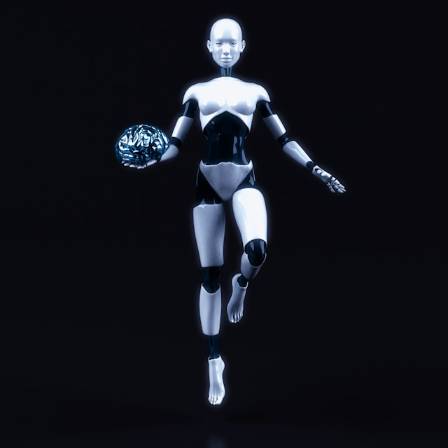
Understanding where humanoid robots fit requires a comparison with established automation tools. Rather than replacing existing technology, humanoids fill a specific niche in the broader industrial toolkit.
While traditional robots excel at high-speed, repetitive tasks in fixed stations, humanoid robots are designed for "environmental universality." They are best suited for spaces that have not been optimized for automation, such as legacy assembly lines or complex logistics hubs where mobility and dexterity are paramount.
Moving from Technical Feasibility to Operational Value
Recent technological demonstrations have proven that humanoid robots can maintain balance on uneven ground and perform basic manual labor. However, transitioning from a laboratory success to a factory-floor asset involves significant hurdles. According to the International Federation of Robotics (IFR), challenges such as battery endurance, high production costs, and safety stability in high-traffic environments remain.
The current bottleneck in the industry is no longer whether a humanoid robot can be built, but whether it is economically viable. The narrative is shifting from a "demonstration phase"—showing what the hardware can do—to a "validation phase," where manufacturers seek a clear return on investment (ROI). Success in the next era of automation will be defined by identifying high-impact problems that can only be solved by a human-shaped machine.
For manufacturers, the most effective strategy is targeted exploration. By launching structured pilot programs focused on specific, valuable tasks, companies can measure the real-world performance of humanoid systems and determine where their unique form factor provides a fundamental competitive advantage.

Nearby projects

· en
Your Guide to Buying Water Bottles
Clara Reeves
· en
6 Extreme Water Sports You Should Experience
Noah Sebastian

· en
Paint a Watercolor Swan
Aria Sullivan

· en
Modern Oil Painting Art: Techniques, Trends, and the Evolution of a Timeless Medium
Sophia Wilson

· en
10 Remarkable Health Benefits of Apples
James Whitake

· en
The sika deer : A fascinating species native to East Asia
Damon Wilder