DIY note
Central Thai-Style Green Papaya Salad
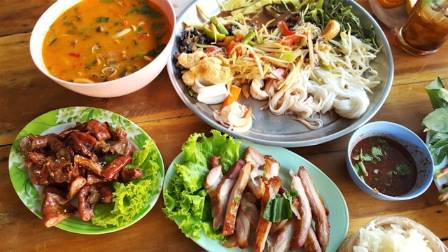
Walk down any busy street in Thailand, and you’re likely to hear the rhythmic pounding of wooden pestles against clay mortars as street vendors craft som tam—a variety of pounded salads tossed with tangy, flavorful dressings. The most famous version is som tam Thai, the shredded green papaya salad from central Thailand, which has become nearly synonymous with the term “som tam.”
Isabella Hayes
Maker
Bench tip
Read the full note below and keep tools nearby.
Shelf
Hobby build
Walk down any busy street in Thailand, and you’re likely to hear the rhythmic pounding of wooden pestles against clay mortars as street vendors craft som tam—a variety of pounded salads tossed with tangy, flavorful dressings. The most famous version is som tam Thai, the shredded green papaya salad from central Thailand, which has become nearly synonymous with the term “som tam.”
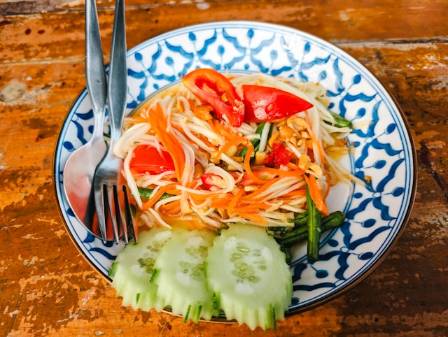
This salad combines crisp strands of unripe green papaya with fresh chilies, fragrant garlic, savory dried shrimp, roasted peanuts, long beans, and tomatoes, all coated in a balanced salty-sour-sweet dressing made from fish sauce, lime juice, and palm sugar. It’s light, refreshing, and quick to prepare—a perfect example of Thai street food at its best.
Som Tam Basics
Tam-style pounded salads are a cornerstone of Lao and Isan cuisines, and they have become a popular, quick-to-go dish across Thailand and wherever Thai or Lao food is served internationally. While the preparation method is generally consistent, ingredients and flavor emphasis vary by region. In Laos and Isan, som tam tends to highlight savory and sour flavors over sweetness, often including pla ra (fermented fish paste), salted crabs, or pickled plums. Central Thai-style som tam, on the other hand, is balanced between sour and sweet, thanks to a generous amount of palm sugar in the dressing. No matter the style, “som,” or sourness, is essential.
Mortar and Pestle: The Essential Tool
A crucial element of tam-style salads is the mortar and pestle—ideally wooden or clay with a wooden pestle. The purpose is to lightly crush the ingredients, releasing their juices while preserving their crunch. Heavy granite mortars, often used for making curry pastes, are excellent for grinding fibrous herbs and dried spices but are too forceful for gently pounding salad ingredients. Wooden or clay mortars are lighter and larger in volume, making them perfect for mixing without crushing too aggressively.
Choosing and Preparing Green Papaya
The green papaya is the star of som tam. In the U.S., green papaya can usually be found at Asian markets. Avoid supermarket “green-skinned” papayas—they may look unripe but are usually more mature and sweet once cut. True green papayas are firm, dense, and harvested for culinary purposes rather than shipping. When selecting, pick fruit that feels heavy and solid. Soft fruit should be passed over.
Traditionally, green papaya is peeled and shredded by hand using a sharp knife. Slice the papaya lengthwise into thin strips and shave across to create uneven shreds that offer varied texture—a mix of thicker crunchy strands and thinner delicate pieces. While this produces the best texture, it can be time-consuming and intimidating for those uncomfortable with knives.
An alternative is a specialized green papaya peeler, such as the Kiwi Pro Slice Peeler. Similar to a Y-shaped julienne peeler, it produces consistent strands quickly, which is why restaurants often use it. Peeler-shredded papaya tends to lose a little crunch compared to knife-cut strips, but it’s much faster. Avoid standard julienne peelers, which create strands that are too thin and may result in soggy salad.
Preparing the Salad
Once the papaya is ready, assembling the salad is straightforward. Begin by lightly pounding fresh chilies, garlic, and dried shrimp in the mortar. Add roasted peanuts and gently crush, then incorporate softened palm sugar, dissolving it around the mortar’s edges. Next, lightly pound long beans and cherry tomatoes to release juices. Finish the dressing with lime juice and fish sauce, tasting carefully at this stage—once the papaya is added, adjustments become more difficult.
The dressing should taste simultaneously sour, sweet, savory, with a subtle heat from the chilies. Finally, fold in the green papaya, gently tossing while lightly pounding to help it absorb the dressing while remaining crisp. Add the remaining peanuts at the end, giving them a light crush. Serve immediately with sticky rice—the longer the papaya sits in the dressing, the softer it becomes.
Som Tam Thai (Central Thai-Style Green Papaya Salad) Recipe
Ingredients:
2 small garlic cloves (6 g)
2–3 fresh Thai chilies (2–3 g), stems removed
1 tbsp (8 g) dried shrimp
2 tbsp (30 g) roasted unsalted peanuts, divided
1 tbsp + 2 tsp (35 g) softened palm sugar
4 cherry tomatoes (~60 g), halved
2 long beans (~30 g), trimmed and cut into 2-inch pieces
3 tbsp (45 ml) fresh lime juice (from 2 limes)
2 tbsp (30 ml) fish sauce
2 cups (170 g) shredded green papaya
Cooked sticky rice, for serving
Instructions:
In a clay or wooden mortar, lightly pound garlic and chilies for about 30 seconds, keeping the pestle close to avoid splattering. Add dried shrimp and 1 tbsp peanuts, and pound gently for another 30 seconds.
Add palm sugar and gently work it into the mixture with circular motions until dissolved, about 30 seconds.
Add long beans and pound lightly for 15–30 seconds. Add tomatoes and lightly crush for 15 seconds.
Stir in lime juice and fish sauce until the dressing is well blended, about 15 seconds.
Add shredded green papaya, holding a spoon in one hand to move ingredients while gently pounding with the pestle for 30 seconds. Take care to preserve the crunch.
Fold in the remaining 1 tbsp peanuts and give a gentle crush. Transfer to a serving plate and serve immediately with sticky rice.
Tips and Notes
Adjust chili quantity to control spiciness.
Dried shrimp is available at Asian markets or online.
Palm sugar can be softened in the microwave for 15 seconds; brown sugar may be substituted if unavailable.
True green papaya is pale white/green, not sweet, and has a crisp texture.
Make-Ahead: Shredded green papaya can be stored in the refrigerator up to 24 hours. The salad is best eaten immediately, as the papaya softens over time.
Nearby projects
· en
How to Build the Perfect Tea Station
Nolan Carlisle

· en
The 10 Most Exquisite French Tarts
Colby Harrington

· en
5 Thrilling Adventures to Ignite Your Wanderlust
David

· en
Mountain Lakes Wilderness
Julian Marlowe

· en
Top 7 Beaches in the World
Kellan Shaw

· en
The Familiar Wild Duck of the Northern Hemisphere
Nessa Beaumont