DIY note
The Familiar Wild Duck of the Northern Hemisphere
Mallard ducks are among the most common and recognizable wild ducks throughout the Northern Hemisphere. They thrive in a wide range of freshwater habitats, including ponds, marshes, streams, rivers, and lakes.
Nessa Beaumont
Maker
Bench tip
Read the full note below and keep tools nearby.
Shelf
Hobby build
Mallard ducks are among the most common and recognizable wild ducks throughout the Northern Hemisphere. They thrive in a wide range of freshwater habitats, including ponds, marshes, streams, rivers, and lakes.
These highly adaptable birds eat many different types of food, including aquatic vegetation, small invertebrates, fish, and insects. Mallards belong to the dabbling duck group, which means they generally feed at or near the water’s surface instead of diving beneath it. They commonly lean forward in the water with their heads underwater while their tails and feet remain above the surface. They also regularly leave the water to graze and forage on land.
Appearance
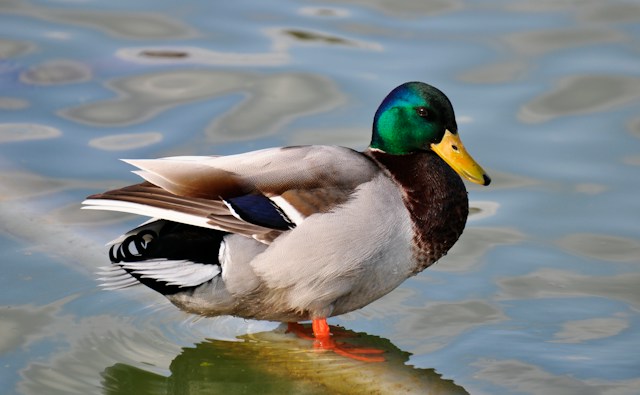
Male mallards, called drakes, are well known for their distinctive and colorful plumage. Their heads have a glossy emerald-green color, while a thin white ring surrounds the neck. Below this is a rich reddish-brown chest.
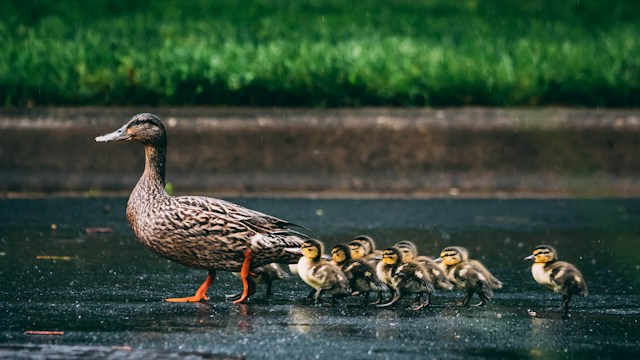
Female mallards are considerably less brightly colored than males. Their plumage consists mainly of mottled shades of brown, providing effective camouflage while they build nests, incubate eggs, and care for their offspring.
Feathers and Molting
Mallards have specialized feathers that help prevent water from penetrating their plumage. Near the base of the tail is an oil-producing gland that supplies an oily substance, which the birds distribute across their feathers during regular grooming.
Beneath the outer layer of water-resistant feathers lies a layer of soft down. These fluffy feathers trap warm air close to the body, helping mallards retain heat and regulate their temperature.
As with many other birds, mallards periodically shed and replace old feathers. Their flight feathers are molted twice each year. While these important feathers are being replaced, mallards temporarily lose their ability to fly until the new feathers have fully developed.
Migration and Flight
Mallards commonly move in groups known as flocks. When undertaking seasonal migrations, they often travel in the familiar V-shaped formation used by many other migratory birds.
As winter arrives, numerous mallards head south in search of milder weather and more reliable food sources. During their seasonal movements, they frequently return to the same resting locations from one year to the next.
While migrating, mallards use features of the natural landscape to assist with navigation. Rivers, coastlines, valleys, and other geographical features can serve as visual guides as they travel across long distances.
Breeding and Ducklings
Female mallards generally construct their nests on the ground close to water. Nest sites may include shallow hollows, areas concealed by vegetation, and, in some cases, cavities within trees.
A female can lay as many as 12 eggs. To keep the eggs warm and help conceal the nest, she lines and covers it with soft down feathers pulled from her own body.
After emerging from their eggs, mallard ducklings develop rapidly. Their eyes open shortly after hatching, and in a little more than a day, they can already walk, swim, and begin finding food on their own.
Young mallards usually spend less than a month in the nest. A collection of ducklings from the same mother is called a brood. Once they leave the nest, the young remain close to their mother for safety and often travel behind her in a neat single-file line while moving across land or water.
Nearby projects
· en
6 Science-Backed Health Benefits of Peaches: More Than Just a Sweet Stone Fruit
Aiden
· en
Stunning Mont St-Michel Inspires
Kaia Sterling
· en
How to Make Japanese Oden
Cameron Reese
· en
The Rise of the Petronas Towers
Mason Sterling
· en
9 Essential Yoga Poses for Beginners to Boost Well-Being
Addison
· en
10 spots to marvel at Victoria Harbour
Darius Lennox