DIY note
The difference between seals and sea lions
Have you ever thought about what really separates seals from their close relatives, the sea lions?
Coren Maddox
Maker
Bench tip
Read the full note below and keep tools nearby.
Shelf
Hobby build
Have you ever thought about what really separates seals from their close relatives, the sea lions?
Seals, sea lions, and walruses all belong to the pinniped group. The word “pinniped” comes from Latin and means “fin-footed,” referring to the specialized limbs that allow these animals to move through the water.
Their front flippers are different
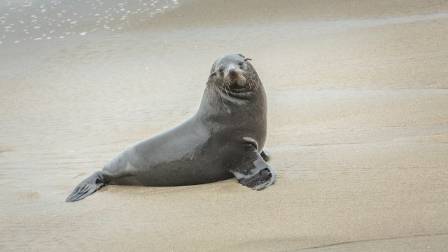
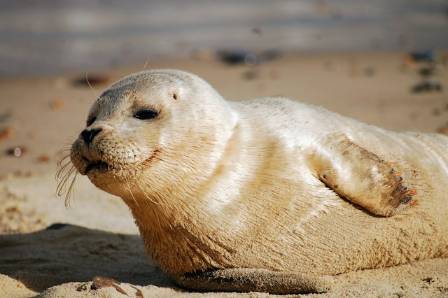
One of the easiest ways to tell seals and sea lions apart is by looking at their front limbs. Seals have relatively small, furry-looking front feet that are actually thinly webbed flippers. Each small toe has its own claw, giving their forelimbs a compact appearance.
Sea lions have noticeably different front flippers. Their fore flippers are longer and more elongated, with most of the surface covered by skin rather than fur. Compared with the short front limbs of seals, sea lions' flippers appear much larger and more prominent.
Sea lions have visible outer ears
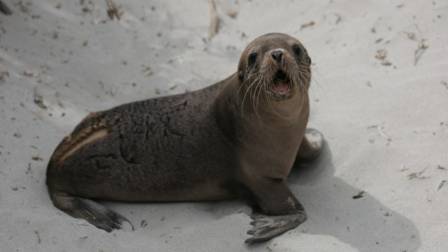
Another obvious difference is found around the head. Sea lions have small external ear flaps that are easy to recognize.
True seals, sometimes called earless seals, do not have visible external ears. Instead, they have tiny openings on either side of their heads. These ear openings can be difficult to notice unless you are close enough to examine the animal carefully.
Sea lions are much louder
The two groups also differ in the sounds they make. Sea lions are generally quite vocal and can produce loud calls, making them noticeably noisy animals.
Seals tend to be much quieter. They can vocalize, but their sounds are usually softer and may include gentle grunts rather than the louder calls commonly associated with sea lions.
Seals are better adapted to life in the water
Both seals and sea lions divide their lives between aquatic and terrestrial environments, but seals are generally more specialized for spending time in the water.
Although seals can look round and somewhat bulky, they are typically smaller and more streamlined than sea lions, giving them an efficient body shape for swimming.
Their rear flippers point backward and cannot rotate underneath their bodies. This arrangement makes seals capable and speedy swimmers, but it creates a major disadvantage when they are moving on land. Instead of walking, seals generally have to move by dragging or wriggling their bodies along the ground in a basic belly-crawling motion.
Sea lions have a much easier time traveling over land. They can rotate their hind flippers forward and position them underneath their large bodies, allowing them to support themselves and effectively “walk.” This ability is one reason sea lions have historically been more commonly featured in aquariums and marine animal shows.
Seals are more solitary
Social behaviour provides another important distinction between the two animals. Seals are generally less social than sea lions and tend to spend more of their time in the water.
In the wild, many seals lead relatively solitary lives. They may gather on land during a particular period of the year, often coming ashore together for breeding and mating, after which they return to a more solitary lifestyle.
Sea lions, by comparison, are highly social animals. They gather in large groups known as herds or rafts, and these gatherings can sometimes contain more than 1,500 individuals.
It is common to see large numbers of sea lions hauled out together along beaches or other coastal areas. They may lie close together on the sand, creating a huge, loosely organized mass of animals resting together under the midday sun.
These differences in body structure, ears, vocalizations, movement, and social behaviour make it relatively easy to distinguish seals from sea lions once you know what characteristics to look for.
Nearby projects
· en
Amanitas: From Deadly to Delicious
Evander Lane
· en
Top 10 most beautiful water towns in China
Therin Brooks
· en
What Is Feather Reed Grass
Wren Foster
· en
Desert Pavement: A Unique Wind-Formed Landscape
Isabella Thornfield

· en
Beijing’s giant bird’s nest
Callum Rhodes
· en
Things you probably didn’t know about Big Ben
Adrian Holloway