DIY note
Why Is the Pyramid of Kukulcan So Famous?
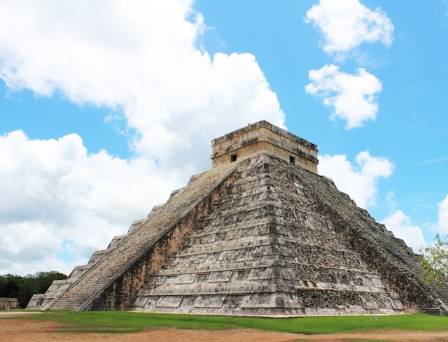
The Pyramid of Kukulcan, commonly called El Castillo, is among the most famous and recognizable monuments at Chichen Itza, the ancient Maya city situated on Mexico's Yucatan Peninsula. Its remarkable construction, carefully planned astronomical orientation, and deep religious importance have fascinated archaeologists, historians, and visitors for generations.
Mason Ellis
Maker
Bench tip
Read the full note below and keep tools nearby.
Shelf
Hobby build
The Pyramid of Kukulcan, commonly called El Castillo, is among the most famous and recognizable monuments at Chichen Itza, the ancient Maya city situated on Mexico's Yucatan Peninsula. Its remarkable construction, carefully planned astronomical orientation, and deep religious importance have fascinated archaeologists, historians, and visitors for generations.
Today, the pyramid is recognized as part of the UNESCO World Heritage Site of Chichen Itza and was selected as one of the New Seven Wonders of the World. It represents both the extraordinary engineering abilities and the spiritual worldview of the Maya civilization. Its combination of architecture, astronomy, mathematics, and religion makes it an especially important destination for anyone interested in ancient cultures.
1. Precise Architecture and Mathematical Design
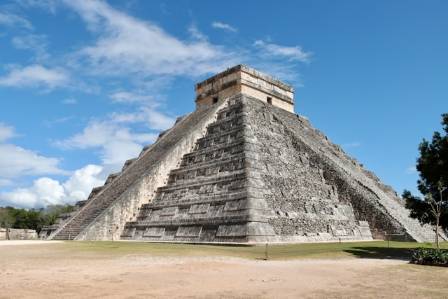
The Pyramid of Kukulcan rises approximately 98 feet, or 30 meters, above the surrounding site. Its four-sided stepped structure was carefully designed with connections to the Maya calendar.
Each of the pyramid's four stairways contains 91 steps. When the upper platform is included in the calculation, the total becomes 365 steps, corresponding to the number of days in the solar year.
This arrangement demonstrates the Maya understanding of mathematics and time measurement. Rather than serving simply as a monumental building, the pyramid incorporated numerical and calendrical concepts directly into its design.
Each face is oriented toward one of the four cardinal directions, while the overall symmetry reflects the remarkable precision achieved by Maya builders. Mathematical principles and religious symbolism were therefore woven into the physical structure of the monument.
2. The Serpent Shadow at the Equinox
Perhaps the most famous feature of Kukulcan's pyramid appears around the spring and autumn equinoxes, generally around March 20–21 and September 22–23.
As the sun moves toward the horizon, light and shadow interact with the pyramid's northwest staircase. The resulting pattern creates the appearance of a serpent gradually moving down the steps.
The effect is traditionally connected with Kukulcan, the feathered serpent deity who held an important position in Maya religious traditions. Near sunset, a series of seven triangular patches of light and shadow appears along the staircase, visually resembling the body of a serpent descending toward the ground.
The phenomenon attracts large numbers of visitors to Chichen Itza each year. It is also an impressive demonstration of how the builders understood the movement of the sun and incorporated celestial events into their architecture.
3. Religious and Cultural Importance
The pyramid was dedicated to Kukulcan, a feathered serpent deity commonly associated with Quetzalcoatl, a related figure found in other Mesoamerican traditions.
Kukulcan was regarded as a powerful supernatural being capable of moving between the heavens, the earthly world, and the underworld. His serpent imagery was connected with ideas such as renewal, transformation, rebirth, and the continuing cycle between life and death.
The structure was therefore much more than an architectural achievement. It functioned as an important ceremonial setting where religious rituals and offerings could be performed in honor of the deity.
Within Maya cosmology, Kukulcan was also understood as a link between human beings and the divine realm. This spiritual role gave the pyramid a profound significance for the community and transformed it from a monumental structure into a place of worship and reverence.
4. Astronomy and the Maya Calendar
The Maya developed an exceptionally sophisticated understanding of astronomy, and the Pyramid of Kukulcan provides striking evidence of that knowledge.
The pyramid's orientation and design are closely associated with solar movements. The position of the sun and other celestial cycles were important not only for religious observances but also for determining agricultural activities and organizing the yearly calendar.
The monument is also connected conceptually with the Maya Long Count calendar, which organized time into units including baktuns, katuns, and tuns. These larger cycles reflected the Maya belief that celestial movements and human existence were closely intertwined.
For the Maya, astronomy was not simply a method of observing the sky. It influenced ceremonies, agriculture, social organization, and religious beliefs. Kukulcan's pyramid physically expresses this connection between the heavens and the human world.
5. The Famous Quetzal Echo
Another fascinating characteristic associated with the Pyramid of Kukulcan is an unusual acoustic effect sometimes called the Quetzal Echo.
When a person claps near the bottom of the pyramid's staircase, the sound can bounce off the structure and return as a distinctive echo. To listeners, the resulting sound can resemble the call or chirp of a quetzal, a brilliantly colored bird that held special importance in Maya culture.
The quetzal was associated with the feathered serpent deity and was regarded as a connection between the earthly and spiritual worlds.
Whether the acoustic effect was deliberately engineered for ceremonial purposes remains a subject of discussion, but the phenomenon has added considerably to the pyramid's mystery. It also demonstrates how sound and architectural space interact within the monument.
6. A New Wonder of the World
In 2007, Chichen Itza and its iconic Pyramid of Kukulcan were selected among the New Seven Wonders of the World. The recognition brought even greater international attention to the ancient Maya site.
The designation reflects the extraordinary combination of architectural achievement, cultural importance, historical value, and spiritual symbolism represented by the pyramid.
Its inclusion among the New Seven Wonders has also encouraged greater global interest in Maya civilization and reinforced the importance of protecting, researching, and preserving Chichen Itza for future generations.
7. A Lasting Symbol of Mexican Heritage
The Pyramid of Kukulcan has become an important symbol of Mexico's history and cultural heritage. For many people in Mexico and among Maya communities, it represents the endurance of Indigenous traditions and the remarkable accomplishments of the ancient Maya.
The arrival of visitors from around the world provides an opportunity to increase awareness of Mexico's long and complex history. Chichen Itza also demonstrates the impressive achievements of ancient Mesoamerican societies and their sophisticated interpretations of nature, time, astronomy, and spirituality.
For descendants of the Maya, the site carries an especially meaningful connection to their cultural heritage. The pyramid therefore represents not only an ancient monument but also a continuing symbol of identity and the enduring legacy of Maya civilization.
Conclusion
The Pyramid of Kukulcan remains one of the most extraordinary surviving monuments of the ancient world. Its carefully calculated architecture, relationship with astronomical events, mathematical design, acoustic characteristics, and religious importance reveal the remarkable sophistication of Maya civilization.
A visit to Chichen Itza provides an opportunity to experience these achievements firsthand. From the dramatic serpent-like shadow that appears during the equinoxes to the mysterious echo produced by the pyramid's architecture, its many features reveal a civilization deeply connected to mathematics, religion, nature, and the cosmos.
The Pyramid of Kukulcan continues to stand as a powerful reminder of the creativity, knowledge, and spiritual traditions of the ancient Maya.
Nearby projects

· en
Ten facts about orcas (killer whales)
Julian Parker
· en
The Role Of Manned Submersibles In An Autonomous Age
Hayden Moore
· en
Atlas Mountains Trekking Morocco: A Journey of Nature, Culture, and Altitude
Iris

· en
A Genuine and Sincere Account of Reaching the Summit — The Ultimate Adventure Journey
William Carter

· en
Long-Tailed Tit – The Flying Teaspoon
Sienna Hayes

· en
How To Make Macarons
Caspian Laurent