
DIY note
Essential Knowledge Regarding Planet Earth
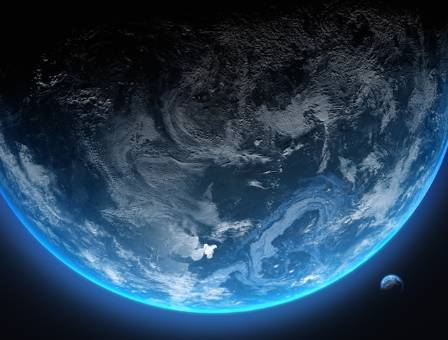
Earth is a remarkable world, serving as our home in the vastness of space. While we inhabit this planet daily, its physical characteristics, history, and movement through the solar system involve complex scientific processes. The following overview details the fundamental nature of Earth, from its ancient origins to its unique ability to sustain life.
Ethan Samuel Whitfield
Maker
Bench tip
Read the full note below and keep tools nearby.
Shelf
Hobby build
Earth is a remarkable world, serving as our home in the vastness of space. While we inhabit this planet daily, its physical characteristics, history, and movement through the solar system involve complex scientific processes. The following overview details the fundamental nature of Earth, from its ancient origins to its unique ability to sustain life.
The Physical Profile and Motion of Earth
Earth is positioned as the third planet from the sun within our solar system. Its name is derived from ancient English and Germanic terms that translate to "the ground." Geologically, the planet is approximately 4.5 billion years old, a figure determined by scientists through the extensive study of planetary rock formations.
In terms of movement, Earth travels in an orbital path around the sun at a velocity of roughly 30 kilometers per second. A single complete revolution takes 365 days, which defines the length of a calendar year. Simultaneously, the planet rotates on its axis—an imaginary vertical line running from the North Pole to the South Pole. This rotation creates the cycle of day and night, as different sides of the planet take turns facing the sun's light.

Seasonal Changes and Planetary Shape
The variety of seasons experienced on Earth is the result of the planet being tilted at an angle of 23.4 degrees on its axis. As Earth orbits the sun, this tilt causes different regions of the globe to receive varying amounts of direct sunlight at different times of the year.
While often depicted as a perfect sphere, Earth is actually an oblate spheroid. It resembles a slightly flattened ball that bulges at the equator. This specific shape is caused by the centrifugal force of the planet's rotation combined with the effects of gravity. Gravity is the invisible force of attraction that pulls objects toward the center of the Earth, preventing physical matter and the atmosphere from drifting into space.
Life-Sustaining Characteristics and the Atmosphere
Earth is currently the only known planet in the solar system capable of supporting life. This is primarily due to the abundance of liquid water and oxygen. Furthermore, Earth's specific distance from the sun places it in a temperate zone that is neither too hot nor too cold for biological organisms to thrive.
The planet is enveloped by the atmosphere, a protective layer of gases composed mostly of nitrogen and oxygen. This gaseous blanket serves several critical functions: it shields the surface from the sun's most intense rays, maintains a stable and comfortable temperature, and acts as a barrier that destroys most meteors before they can impact the surface. Measuring approximately 12,800 kilometers in diameter, Earth stands as the fifth-largest planet in the solar system, following the gas giants Jupiter, Saturn, Uranus, and Neptune.
Nearby projects

· en
The Most Majestic Mute Swans: A Closer Look
Daniel Scott

· en
The sika deer : A fascinating species native to East Asia
Damon Wilder

· en
Your Guide to Buying Water Bottles
Clara Reeves

· en
The Longest Guitar Solo Ever Recorded
Jahfin

· en
Dragonflies Are Incredible Predators That Devour Hundreds of Thousands of Local Insects
Bradley Thomas

· en
Guide to Landscaping With Sandstone
Stellan Ford