DIY note
Beijing’s giant bird’s nest
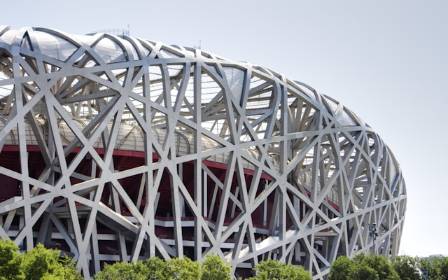
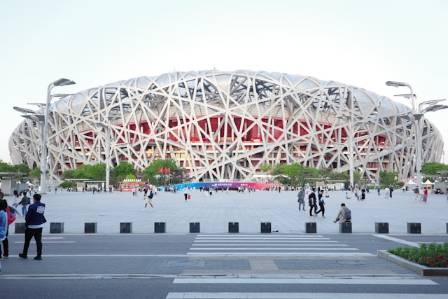
The Bird’s Nest is the famous nickname of the Beijing Olympic Stadium, an architectural landmark created for the 2008 Olympic Games in China. Featuring an impressive steel framework and a seating capacity of more than 90,000 people, the stadium has become a powerful representation of China’s rapid development, technological progress, and global aspirations.
Callum Rhodes
Maker
Bench tip
Read the full note below and keep tools nearby.
Shelf
Hobby build
The Bird’s Nest is the famous nickname of the Beijing Olympic Stadium, an architectural landmark created for the 2008 Olympic Games in China. Featuring an impressive steel framework and a seating capacity of more than 90,000 people, the stadium has become a powerful representation of China’s rapid development, technological progress, and global aspirations.
Designed by internationally acclaimed Swiss architects Jacques Herzog and Pierre de Meuron, together with the Chinese Architecture Design and Research Group, the Bird’s Nest represents a remarkable milestone in contemporary architecture. Its distinctive appearance comes from a complex network of interwoven steel elements that resemble the structure of a bird’s nest. The design concept was inspired by the simple idea of wrapping a single thread around a sphere, creating an advanced architectural form that challenged traditional approaches to metal construction.
The Importance of Steel in the Bird’s Nest Design
The Bird’s Nest was not only built as a venue for the Olympic Games but also served as a demonstration of China’s engineering capabilities and innovation in large-scale construction. With approximately 110,000 tons of steel used in its structure, it became the world’s largest steel construction project at the time.
The extensive use of metal allowed the stadium to respond effectively to environmental changes, including temperature variations, while maintaining strength, stability, and structural flexibility.
Modern architectural projects require materials that combine durability with visual appeal. Metal mesh solutions provide similar advantages in stadium design by offering aesthetic qualities along with practical functions. Like the Bird’s Nest, which used steel to achieve both strength and flexibility, architectural metal meshes can improve sports facilities through enhanced airflow, safety, and striking visual effects.
Innovative Approaches in Contemporary Stadium Architecture
The influence of the Bird’s Nest continues to shape modern stadium design, where creativity, performance, and functionality remain essential. Advanced metal mesh systems have been incorporated into several major sports venues, including the Groupama Arena in Hungary.
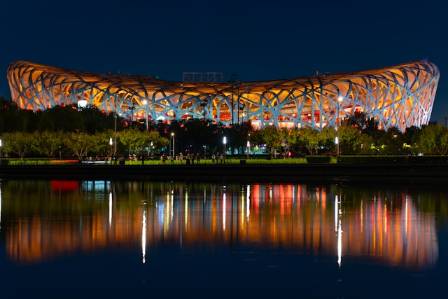
The Groupama Arena features around 9,000 square meters of Eiffel 40100 stainless steel mesh, forming a distinctive transparent exterior surface. Combined with architectural lighting, the facade creates an impressive nighttime appearance, similar to the way the Bird’s Nest becomes a glowing symbol after dark.
Another example is the Puskás Aréna in Hungary, which uses approximately 19,500 square meters of Eiffel 20100 stainless steel mesh across its exterior. This metallic covering adapts to the stadium’s design and produces changing visual effects depending on viewing angles and lighting conditions. At night, the mesh works together with the illumination system to create a dynamic architectural presence.
The Practical Advantages of Metal Mesh in Stadium Construction
One of the greatest strengths of metal mesh in stadium architecture is its ability to combine attractive design with practical performance. Similar to the Bird’s Nest and newer projects such as Sepsi Stadium in Romania, metal mesh systems can improve both the appearance and operation of large sports facilities.
At Sepsi Stadium, Eiffel 40100 stainless steel mesh is used as an exterior enclosure. The material provides protection and security while still allowing natural light to enter the structure. This helps create a comfortable environment for spectators while preventing unauthorized access and improving safety around the venue.
Metal mesh also supports better field conditions by allowing air movement and sunlight to reach the grass surface. This is especially important for maintaining the quality of playing areas during major sporting events. In addition, metal mesh can contribute to energy efficiency by reducing direct solar exposure and acting as a barrier against wind and rain.
Advancing Stadium Design Through Metal Innovation
The versatility of architectural metal mesh can be seen not only in the Bird’s Nest but also in other internationally recognized venues such as Roland Garros in Paris. For this project, approximately 5,000 square meters of specially developed Eiffel 30150 mesh was created for exterior cladding applications.
Whether used for facades, protective coverings, or security solutions, metal mesh provides architects with flexible options for addressing the complex demands of modern stadium construction. Its combination of strength, transparency, ventilation, and visual impact makes it an important material for creating the next generation of sports architecture.
Nearby projects
· en
History of the Phonograph
Stella Collins

· en
Tree Frogs: A Diverse Group of Climbing Amphibians
Caroline Baker

· en
Bald Eagle
Ethan Jackson

· en
The Thorny Shrub with Brilliant Red Berries
Coren Maddox

· en
Most Incredible Sea Cliffs In The World
Logan Pierce
· en
Make Your Own: Rope Side Tables
Felix Aldridge