← Back to bench2 min build note
DIY note
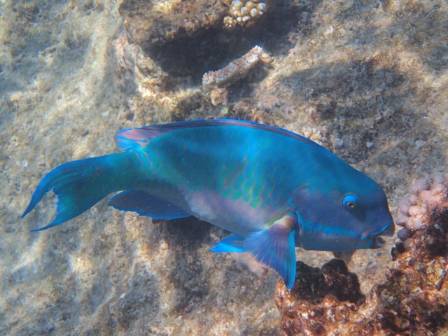
Parrotfish: The Colorful Reef Fish Full of Surprises
Among all the unusual features of parrotfish, it is difficult to determine which one is the most impressive.
S
Sophia Anderson
Maker
Bench tip
Read the full note below and keep tools nearby.
Shelf
Hobby build
Among all the unusual features of parrotfish, it is difficult to determine which one is the most impressive. Their unique feeding behavior, remarkable ability to alter their appearance and sex, and their special nighttime protection make them some of the most fascinating animals found on coral reefs.
A Coral-Based Diet
One of the most distinctive characteristics of parrotfish is their feeding strategy. These colorful reef inhabitants mainly survive by consuming algae that grows within pieces of coral collected from reef surfaces.
With their strong, fused teeth that resemble a bird’s beak, parrotfish scrape and break pieces of coral from reefs. Inside their throats, powerful grinding structures crush the coral material, allowing the fish to access the tiny algae-containing polyps hidden inside.
The coral itself is not used as food and cannot be fully digested. Instead, the leftover coral particles pass through the digestive system and are released as fine sand. In many tropical coastal areas, much of the white sand found on beaches comes from coral fragments processed by parrotfish.
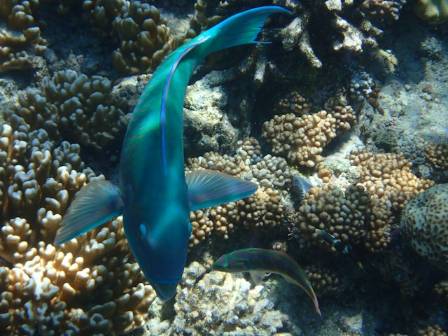
Color Changes and Sexual Transformation
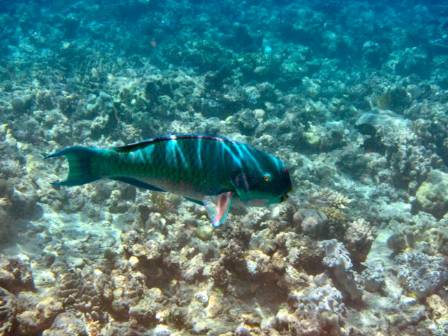
Parrotfish have another extraordinary ability: some species can change sex during their lives. Depending on social structure and reproductive requirements, an individual may transform from female to male.
Their appearance is also remarkably diverse. Different parrotfish species, and even different life stages of the same species, can display completely different colors and patterns. Adult males, females, and young fish may appear so different that identifying them can be extremely difficult, even for researchers.
A Protective Nighttime Cocoon
Certain parrotfish species have developed a unique method of protection while resting at night.
Before sleeping, these fish produce a transparent mucus membrane that surrounds their entire body. This unusual cocoon is created by a specialized organ located on the fish’s head.
Scientists believe the mucus layer helps reduce the fish’s scent, making it harder for nighttime predators, including moray eels, to locate them while they are inactive.
Distribution and Population
Parrotfish are close relatives of wrasses and are widely distributed throughout tropical coral reef habitats across the world’s oceans.
There are roughly 80 known species of parrotfish, with body lengths ranging from less than 30 centimeters (1 foot) to approximately 1.2 meters (4 feet).
These fish are essential members of coral reef ecosystems. By feeding on algae and producing coral sand, they help maintain healthy reef environments and contribute to the natural formation of tropical beaches.
Parrotfish as Food
Although parrotfish are not commonly consumed in the United States, they are considered valuable seafood in many other regions.
In Polynesian communities, parrotfish was traditionally eaten raw and was once regarded as an exclusive delicacy reserved for royalty.
Nearby projects

· en
The Most Important Year: Raising a Dachshund Puppy
Jessica Miller

· en
The best viewing spot in one of the three cities with the most beautiful night views
Michael Williams

· en
Modern Oil Painting Art: Techniques, Trends, and the Evolution of a Timeless Medium
Sophia Wilson

· en
10 Most-Loved Strawberry Desserts: Better Homes & Gardens’ Top-Saved Recipes
Sophia

· en
Blue Tears
Damon Wells
· en
Interesting Facts About Ducks You May Not Know
Evan Taylor