DIY note
Succulent Plants: The Perfect Indoor Greenery
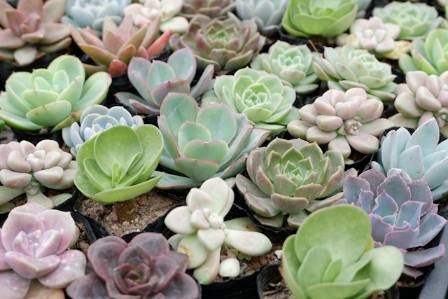
I find it rather amusing that plants naturally built to survive in hot, arid desert environments are known as “succulents.” To me, the word sounds like something that belongs to biting into a juicy piece of fruit on a warm summer day. In reality, succulent plants are remarkably efficient water-storage specialists. Their thick, firm tissues allow them to hold onto moisture and survive for surprisingly long periods with very little water. Their unusual shapes and relatively simple care requirements have also made them extremely popular houseplants.
Lucien Barrett
Maker
Bench tip
Read the full note below and keep tools nearby.
Shelf
Hobby build
I find it rather amusing that plants naturally built to survive in hot, arid desert environments are known as “succulents.” To me, the word sounds like something that belongs to biting into a juicy piece of fruit on a warm summer day. In reality, succulent plants are remarkably efficient water-storage specialists. Their thick, firm tissues allow them to hold onto moisture and survive for surprisingly long periods with very little water. Their unusual shapes and relatively simple care requirements have also made them extremely popular houseplants.
Succulent species can be found across many different plant families. The cactus family, Cactaceae, is probably the group most people associate with succulents, although families such as the fig-marigolds and stonecrops also contain numerous succulent species. One of their defining characteristics is their ability to develop thick, swollen stems or leaves that store water and help them withstand dry conditions. Too much water can cause these plants to rot, while too little can cause them to shrivel back toward their roots. Because they are adapted to conserve both water and nutrients, succulents can often survive with surprisingly little attention.
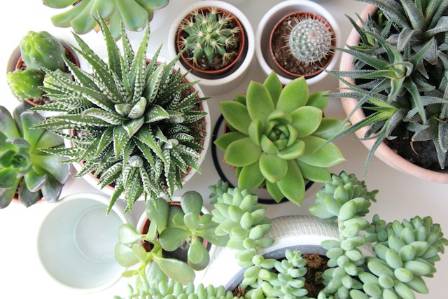
There is some disagreement over whether cacti should technically be classified as succulents, so they will not be included here. Instead, this article focuses on familiar succulent plants such as agave, yucca, aloe, bromeliad, sedum, sempervivum, echeveria, euphorbia, halophytes, Graptopetalum paraguayense, commonly called ghost plant, and several others.
Environment
In general, succulents grow best in warm conditions, relatively dry soil that drains efficiently, and plenty of direct sunlight. There are, however, some varieties that can tolerate temperatures below freezing. Ground-covering sedums and brightly colored sempervivums are two examples of succulents that can withstand colder conditions.
These plants are also well suited to environments with low humidity, although they still need water to remain healthy. Significant temperature fluctuations, prolonged lack of water, and insufficient sunlight can all have a noticeable impact on the condition and appearance of succulent plants.
Soil
When planting succulents for the first time or moving them into a new container, you can choose a commercial potting mix specifically formulated for succulents. Another option is to create your own growing medium by combining equal parts potting soil and coarse sand. Avoid using beach sand.
Select a container that provides enough room for the plant to grow and, most importantly, has drainage holes in the bottom. Excess water needs to escape easily to prevent the roots from remaining saturated.
During the summer, succulents can be fertilized with a standard houseplant fertilizer as often as twice a year. Dilute the fertilizer to approximately half of the strength recommended on the package before applying it.
Light
Most succulents prefer full sun to partial sunlight. A bright windowsill that receives at least six hours of direct sunlight each day is usually an excellent location. When natural sunlight is limited, artificial grow lights can also be used to provide the illumination these plants need.
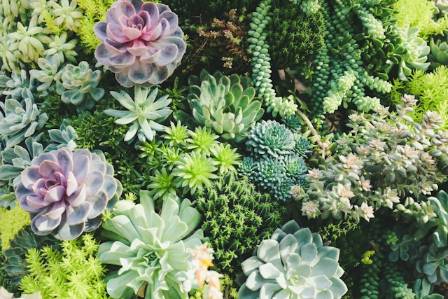
An increase in sunlight can sometimes cause succulents to develop richer colors, a process often described as “blushing.” In contrast, insufficient light may leave plants looking faded, dull, or grayish. When growing under suitable conditions, healthy succulents can display an impressive range of colors, including pink, orange, purple, blue, deep nearly black shades, and even red.
Water
The main growing period for most succulents occurs during spring and summer, when temperatures are warmer. During these active months, plants generally require somewhat more water. In winter, however, their needs decrease considerably, and watering approximately once every two to three weeks is often enough to prevent the leaves from becoming dehydrated.
When watering, thoroughly soak the growing medium until excess water begins flowing through the drainage holes. Afterward, allow the soil to dry out completely before watering again. It is better to give the plant a generous amount of water at one time than to provide tiny amounts frequently.
Keep in mind that watering requirements can vary from one succulent species to another. Always learn about the particular plant you are growing and follow care recommendations appropriate for that species.
Benefits
Keeping succulents indoors can contribute to cleaner indoor air, and certain varieties, including aloe and yucca, are associated with medicinal uses. They may also have a positive effect on mood and create a more pleasant indoor environment.
Several succulent varieties are especially convenient for indoor cultivation because they remain relatively compact, grow comfortably in smaller containers, and offer distinctive shapes or textures.
Jade Plant (Crassula ovata)
The jade plant features thick, glossy, oval-shaped green leaves, which can develop reddish tips. It also has a sturdy, woody trunk with branching stems, giving the plant a miniature tree-like appearance. Under suitable conditions, it can produce small white or pink flowers with a star-like shape.
Aloe Vera
Aloe vera is one of the best-known succulent plants because of its widely recognized medicinal uses. Its thick, pointed leaves emerge from a central growing point and can vary in color from green to gray. Its distinctive foliage and relatively straightforward care make it a popular choice for growing indoors.
Panda Plant (Kalanchoe tomentosa)
The panda plant is a relatively small succulent with soft, fuzzy gray leaves. Brown markings commonly appear around the tips of the leaves, giving the plant its distinctive appearance. With proper care, it can remain healthy and live for many years. Although it is capable of flowering, blooms are uncommon.
Nearby projects

· en
Crab-eating Macaque: The Adaptable Monkey of Southeast Asia
Ronan Ellis

· en
The Most Important Year: Raising a Dachshund Puppy
Jessica Miller

· en
Outfits that make you look intelligent
Soren Ash
· en
Fun Facts About Fishes!
Brandon Carter

· en
Artistic Guide: Illustrating a Coastal Sunset
Zachary Cole Harrington

· en
Stunning Mont St-Michel Inspires
Kaia Sterling