DIY note
The Svalbard rock ptarmigan: A unique Arctic land dweller
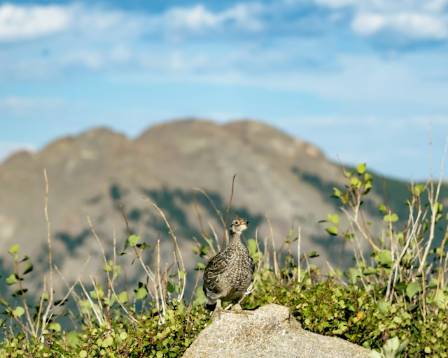
Native to Norway’s Svalbard archipelago and Franz Josef Land, the Svalbard rock ptarmigan (Lagopus muta hyperborea) is the only land-dwelling bird species that remains on the Arctic archipelago all year round.
Matthias Ford
Maker
Bench tip
Read the full note below and keep tools nearby.
Shelf
Hobby build
Native to Norway’s Svalbard archipelago and Franz Josef Land, the Svalbard rock ptarmigan (Lagopus muta hyperborea) is the only land-dwelling bird species that remains on the Arctic archipelago all year round.
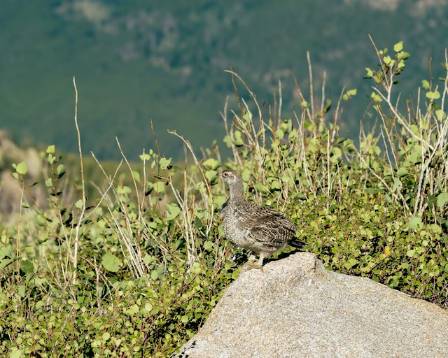
The bird favors elevated, rocky alpine landscapes and tundra surrounded by Svalbard’s glaciers and snow-covered mountains. As a subspecies of the rock ptarmigan and a member of the grouse family, it occupies the far northern edge of the species’ overall distribution.
The genus name Lagopus translates to “hare foot,” describing the bird’s feather-covered legs. The name ptarmigan comes from the Gaelic word tarmachan, meaning “croaker,” a reference to its surprising calls, which have been likened to the sound of a stick being dragged along a picket fence.
Unique adaptations for the cold
The Svalbard rock ptarmigan possesses several specialized features that help it withstand the severe Arctic climate. Its dense, insulating plumage acts as an important barrier against extremely low temperatures.
Its feathers also provide seasonal camouflage. The birds molt from white plumage during winter into brown feathers in spring and summer, helping them blend into their surroundings and avoid predators. The Svalbard rock ptarmigan has a relatively narrow bill and a noticeable dark stripe running across the eye.
The Svalbard rock ptarmigan (Lagopus muta hyperborea) is regarded as an iconic species of the Russian Arctic Desert Islands bioregion, located within the Palearctic Tundra subrealm of Subarctic Eurasia.
Seasonal migratory patterns
The Svalbard rock ptarmigan lives in an environment defined by dramatic seasonal contrasts. Winters are extremely cold and dark, while summers are short but intense, bringing continuous daylight when the sun remains above the horizon. These conditions create a habitat that only highly adapted species can endure.
Scientists still know relatively little about exactly where these birds spend the winter or the precise routes they follow when moving between seasonal habitats. However, it is clear that the ptarmigans use different areas during winter and the breeding period. During winter, they move toward locations with less snow and greater access to vegetation, including areas beneath tall cliffs that support bird colonies during the summer.
A pilot study using satellite tracking found that the birds generally remain around their breeding grounds from spring until hunting season begins in September. At that point, they move toward both northern and southern areas.
The delicate balance of the food web
Because the Svalbard rock ptarmigan occupies such an isolated environment, it has relatively few major natural predators besides humans. Arctic foxes, glaucous gulls, and Arctic skuas are among its principal predators. The population also has low genetic diversity and appears to remain separated from other ptarmigan populations.
Its ecosystem is unusually simple compared with many other ptarmigan habitats. The isolated high-Arctic islands where it lives lack small rodents and the specialized predators that depend on them, meaning the population cycles commonly seen in other ptarmigan species are largely absent.
Alpine bistort is the most significant food plant during summer and autumn. Meadow grasses and hair grasses also make up an important portion of the diet. During early winter, purple saxifrage and tufted saxifrage become major food sources, while polar willow becomes increasingly important later in winter as the birds build fat reserves for spring.
The birds also consume berries, buds, insects, and insect larvae. Rock ptarmigans are able to extract nutrients efficiently from foods that are relatively poor in quality because they possess an elongated cecum, a pouch located where the small and large intestines meet. Fermentation within this structure helps provide additional energy to meet their metabolic demands.
Storing energy in the harsh tundra
Most rock ptarmigan subspecies have relatively limited abilities to store fat, which means birds living through winter must spend more time searching for food. Because food resources are especially scarce across the Svalbard range, the local subspecies needs greater energy reserves and has evolved the ability to increase its body mass substantially.
Svalbard rock ptarmigans can develop fat stores roughly five times larger than those of other rock ptarmigan subspecies. These reserves help them endure periods when food is difficult to obtain and can provide energy for as long as ten days. Much of the additional body mass accumulated during winter is ultimately used to prepare for the spring breeding period.
Breeding behaviors and independent chicks
Male Svalbard rock ptarmigans return to their breeding territories around the end of March, while females arrive in early April. Since only a small proportion of the available landscape provides medium- to high-quality breeding habitat, securing and defending suitable territories is particularly important.
Prime nesting locations occur on elevated, rugged ridges exposed to the wind and on slopes facing south. These areas lose their snow earlier and therefore offer vegetation sooner in the season.
During the short Arctic summer, the birds undergo a striking change. Males develop prominent red combs above their eyes and begin elaborate courtship displays. Their behavior may include spreading their tails, extending or dragging their wings, moving their heads from side to side, bowing, circling females, and calling.
Females construct nests among rocks and lay between 9 and 11 eggs. The eggs are placed in shallow depressions lined with moss and feathers. After hatching, the female and her chicks leave the nest within one or two days. At this point, the bond between the adult male and female ends.
The chicks are precocial, meaning they are capable of moving around and feeding themselves soon after birth. They become fully fledged after approximately 10–12 days but continue staying with their mother for another 10–12 weeks. Males generally return to the same territory in later years, while females may select different territories and mates, although they continue returning to the same general breeding region.
Ecological role in the Arctic
Although the Svalbard rock ptarmigan is a relatively small bird, it occupies an important position in the Arctic ecosystem. As a key species within its fragile environment, it contributes to ecological balance in several ways.
The birds help disperse seeds, alter their surrounding habitat through feeding and movement, and provide an important food source for predators. Through these interactions, the species contributes to the overall health and diversity of its Arctic environment and supports the broader network of organisms that share its habitat.
Symbolic role across cultures
For Arctic communities, the Svalbard rock ptarmigan and other ptarmigan have long carried cultural importance. Their ability to survive in extremely difficult conditions has made them symbols of resilience, adaptability, and endurance.
Farther south, Celtic traditions associated the rock ptarmigan with the connection between the human and spiritual realms. The bird was also regarded as a messenger and as a symbol associated with good fortune and prosperity.
Across northern cultures, ptarmigans of different subspecies have been valued by communities that depended on them as an important source of food during the difficult winter months.
Hunting impacts and conservation efforts
The Svalbard rock ptarmigan is the most commonly hunted small game species in the region. Annual harvests can reach approximately 2,300 birds, with the hunting season running from early September through late December.
Current levels of hunting and trapping are not known to represent a serious threat to the species. However, reliable population estimates covering the entire Svalbard Archipelago are still unavailable. A yearly monitoring program established in 2000 has recorded populations occurring at relatively low but stable densities.
As the Arctic climate continues to change rapidly, more detailed monitoring and assessment will be necessary to determine appropriate hunting quotas in the future.
The risks of a changing world
Climate change could create a number of new challenges for the Svalbard rock ptarmigan. The species is a highly specialized feeder, particularly while breeding, which may make it vulnerable to changes in the seasonal timing of its preferred food plants. If plants begin developing earlier or later than usual, the timing may no longer coincide with when the birds need those resources most.
Warmer winter temperatures have generally been associated with positive effects on population growth. However, other changes, including rain falling onto existing snow, have increased winter mortality and contributed to lower production of young birds because of inadequate nutrition.
Another concern is the significant increase in pink-footed goose numbers. These geese now overlap more frequently with ptarmigans in their use of habitat and consume some of the same important food plants, creating greater potential for competition.
Changes in the abundance of alternative food resources, including reindeer carrion and breeding geese, may also influence predation rates. In addition, researchers have observed that warmer conditions could reduce the effectiveness of the ptarmigan’s seasonal camouflage.
Despite possessing extraordinary adaptations for life in the Arctic, the Svalbard rock ptarmigan faces an uncertain future. Climate change could disturb the finely balanced relationships within its ecosystem, creating additional pressures for this species and many others that depend on the same fragile environment.
Conservation measures are already being implemented to protect the ptarmigan and its habitat, but continued efforts will be necessary. Protecting Arctic ecosystems and maintaining suitable habitats will be important for preserving the remarkable Svalbard rock ptarmigan in the years ahead.
Nearby projects

· en
Golden Bridge, Vietnam: Complete Travel Guide
Benjamin Scott
· en
Discover The Fasage Facts About Iconic Australian Koalas
Gardner William
· en
Grey Heron
Mia Thomas

· en
Top 10 Things to Do at Hopetoun House
Ellen
· en
15 Facts About Alpacas
James Turner
· en
Gorilla: The Largest of the Great Apes
Lily Brooks