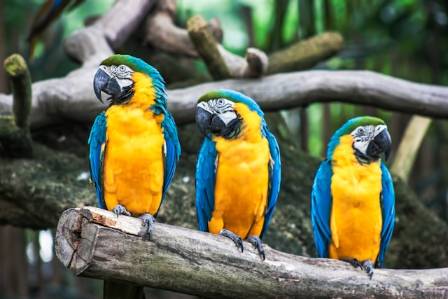
DIY note
All About Parrots
Although many people first become familiar with parrots through movies set on the open seas, these intelligent birds are increasingly being kept as companion animals. For the right person, a parrot can be a wonderful pet, but owning one requires a very different kind of commitment from keeping a dog or cat.
Victor Hayes
Maker
Bench tip
Read the full note below and keep tools nearby.
Shelf
Hobby build
Although many people first become familiar with parrots through movies set on the open seas, these intelligent birds are increasingly being kept as companion animals. For the right person, a parrot can be a wonderful pet, but owning one requires a very different kind of commitment from keeping a dog or cat.
Parrots are highly intelligent and complicated animals. Unlike dogs and cats, pet parrots are not domesticated in the same way and still retain many characteristics of wild animals. This means prospective owners need to understand and accommodate their natural behaviors.
When choosing a parrot, it is important to pay attention to the individual bird’s personality and how it interacts with you rather than selecting one based only on its species or breed. Potential owners should also learn about the bird’s specific needs before bringing one home.
Parrot abandonment and homelessness are significant concerns. Spending time volunteering with a local parrot rescue organization can provide valuable hands-on experience and help someone decide whether they are truly prepared for this responsibility. Parrots can live for 20 to 50 years or even longer, so caring for one may become a lifelong commitment.
African Grey Parrot
African grey parrots are especially famous for their remarkable ability to imitate human speech. They naturally occur in the tropical forests of central Africa, where they live in groups that can contain as many as 30 birds and feed on foods such as fruits and nuts.
According to avian experts, African greys tend to be relatively quiet compared with some other parrot species, but they are exceptionally intelligent. They are generally comfortable being handled by different people, although they may be cautious when something unfamiliar, particularly a new toy, is introduced.
Some owners find that an African grey needs time to accept a new toy. One approach is to place the unfamiliar object near the cage first and gradually move it closer before eventually putting it inside.
These parrots are usually gentle, but they can also be somewhat reserved and may develop a strong preference for one particular person in the household. For this reason, they are generally best suited to owners who already understand bird behavior and care.
African grey parrots also require appropriate exposure to ultraviolet light. Their bodies need UVB radiation to produce usable vitamin D, which is essential for absorbing calcium through the intestines. Because these birds can develop low blood calcium levels when they do not receive sufficient UVB exposure, indoor birds should be provided with an appropriate source of artificial sunlight.
Amazon Parrot
Amazon parrots are well known for their intelligence, impressive vocabularies, and ability to sing. They are generally more vocal than African grey parrots and tend to enjoy being the focus of attention.
These medium-sized birds are primarily green and can be very interactive. However, both experts caution that Amazon parrots may become prone to biting when they are overly excited or stimulated.
Their bites can be surprisingly powerful. An Amazon may bite firmly and continue holding on instead of immediately releasing its grip, potentially causing significant injury. Because of this tendency, some individuals may be better suited to living primarily with one person.
Amazon parrots can also be susceptible to becoming overweight. They therefore need plenty of time outside their cage and regular opportunities for exercise to maintain good physical condition and overall well-being.
Macaw Parrot
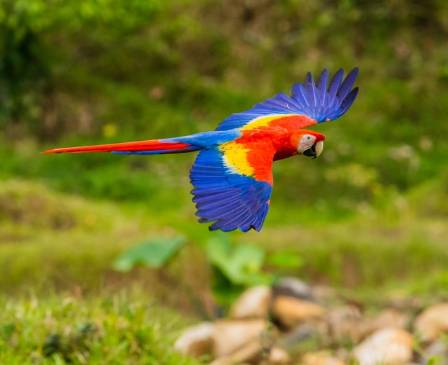
There are numerous macaw species, ranging from smaller varieties such as the Severe Macaw and Yellow-collared Macaw to the enormous Hyacinth Macaw. The smaller species can comfortably perch on a single hand, while a Hyacinth Macaw may require an entire forearm as a perch.
Macaws originate from Central and South America. They can be distinguished from many other parrots by their exceptionally large bills, relatively bare and lighter-colored facial areas, and long tails.
In general, macaws are large birds with equally large personalities. They can be loud, energetic, intelligent, and equipped with very powerful beaks.
After decades of experience working with macaws, avian specialists describe them as intelligent birds that can become capable talkers. They are also among the loudest parrots commonly kept as pets, making them a poor choice for apartment living or households where peace and quiet are particularly important.
Training should begin early. Owners need to establish appropriate boundaries and teach their birds how to behave through consistent, gentle training. Positive reinforcement is particularly useful, while punishment-based methods are not recommended.
Macaws can form extraordinary bonds with their owners and make wonderful companions, but without proper boundaries and training, they may become demanding or even bully the people around them. Early training is therefore an essential part of responsible macaw ownership.
Parrotlet
Parrotlets may be tiny, but their personalities certainly are not. These little birds are intelligent, interactive, and full of confidence, which means they need regular and consistent handling.
Without frequent interaction, a parrotlet can become territorial or aggressive. Their small size can also be misleading when it comes to their bite. Although they measure only about five inches from the tip of the beak to the end of the tail, they can bite much harder than many people would expect.
Parrotlets are among the smallest parrots and are commonly found in blue, green, and yellow color varieties. With appropriate care, they can live for as long as about 20 years.
One advantage for people living in smaller homes is that parrotlets are generally much quieter than many larger parrots, making them a potentially suitable choice for apartment living.
Tips for New Parrot Owners
Anyone considering making a parrot their next pet should carefully think about the long-term responsibilities involved. Several practical steps can make the transition easier for both the bird and its new owner.
Check Animal Shelters and Rescues First
Many parrots of different species end up in shelters or rescue organizations because previous owners could no longer care for them. Before purchasing a bird, check local shelters and rescues to see whether a parrot is waiting for a new home.
Some rescued birds may require additional training and patience while they become comfortable in a new environment, but many can eventually become wonderful companions.
Responsible breeders can also be an option when looking for a bird. However, prospective owners should be cautious when purchasing parrots from pet stores because some birds may originate from large-scale breeding operations. Contacting a local rescue organization before visiting a pet store can help you explore adoption options first.
Find an Avian Veterinarian
A qualified avian veterinarian is essential for determining whether a new bird is genuinely healthy. A thorough veterinary examination can include blood tests and screening for infectious diseases.
Specialized veterinary care can be more expensive than routine pet care, but establishing a relationship with an experienced bird veterinarian can help identify health problems early and give your new companion the best possible start.
Keep the Air Clean
Birds have extremely sensitive respiratory systems, so the quality of the air around them is critically important.
Parrots should never be exposed to cigarette or tobacco smoke, chemical vapors, hairspray, household cleaning products, or fumes from Teflon-coated materials. Certain airborne toxins can cause sudden death, while repeated exposure to harmful substances can contribute to serious long-term health problems.
Their living area should therefore be clean and properly ventilated.
Be Prepared for Noise
Squawks, chirps, calls, and even human-like speech are normal parts of parrot communication. In the wild, parrots commonly become particularly vocal around sunrise and sunset.
Owners can gradually teach their birds when vocalizing is appropriate and encourage quieter behavior during certain hours. Nevertheless, anyone considering a parrot needs to accept that some level of noise is simply part of living with these animals.
Expect Some Mess
Parrots are naturally messy eaters. They feed throughout the day and frequently drop pieces of food, leaving debris around their living areas.
Their messiness does not stop with meals. Parrots are often referred to as hookbills because their curved beaks are naturally designed for chewing, tearing, and shredding. They may happily destroy wooden perches, toys, picture frames, furniture, paper, curtains, and even electrical cables.
A parrot-friendly home therefore needs to be arranged with its natural chewing behavior in mind, and potentially dangerous objects should always be kept out of reach.
Give Parrots Opportunities to Fly
Flying is a fundamental part of being a bird, and parrots are generally active, curious animals that benefit from regular physical activity.
An indoor flight area, a secure outdoor aviary, or a room specifically prepared for safe flying can give a parrot valuable exercise. For an indoor flight space, windows and mirrors should be covered, doors should remain closed, other pets should be kept away, and ceiling fans should never be operating.
Some owners choose to have their birds’ wings clipped to make handling and training easier. Even birds with clipped wings still need opportunities to climb, flap, swing, and move around. They should have plenty of room, appropriate toys, and structures designed for climbing and exercise.
Offer a Balanced Diet
Parrots need a varied and nutritionally complete diet. High-quality pellets should generally form the foundation of their meals, supplemented with appropriate amounts of grains, beans, fresh fruits, and vegetables.
Seeds were once commonly recommended as a major part of a parrot’s diet, but they are now recognized as being relatively high in fat while lacking many important nutrients. Seeds are therefore better reserved for occasional treats or used as rewards during training rather than serving as the primary food source.
Nearby projects
· en
Making Loungewear Look Polished: 5 Simple Strategies
Jack

· en
Top Used Luxury Cars for 2026
Jevon Adelric

· en
How to Build the Perfect Tea Station
Nolan Carlisle
· en
The Groundwork: Mastering Rug Sizing Beneath Your Coffee Table
Oliver Reed

· en
The first deep sea manned submersible
Daniel Woods
· en
Fruit Platter Ideas for Any Occasion
Finn Dawn