DIY note
Examples of Terrace Farming Around the World
The most productive agricultural land is usually a level area with reliable access to water. Many crops, especially rice, depend on flat landscapes where fields can be easily flooded and irrigated. However, for communities living in mountainous or uneven regions, finding suitable farmland has always been a challenge. Thousands of years ago, people developed an ingenious method that transformed steep hillsides into fertile agricultural areas, helping support the rise of major civilizations.
Oliver Sterling
Maker
Bench tip
Read the full note below and keep tools nearby.
Shelf
Hobby build
The most productive agricultural land is usually a level area with reliable access to water. Many crops, especially rice, depend on flat landscapes where fields can be easily flooded and irrigated. However, for communities living in mountainous or uneven regions, finding suitable farmland has always been a challenge. Thousands of years ago, people developed an ingenious method that transformed steep hillsides into fertile agricultural areas, helping support the rise of major civilizations.
Terrace farming involves carving a series of flat platforms into slopes or mountainsides to create spaces where crops can be planted. This ancient agricultural technique has been practiced in many parts of the world, from the rice terraces of Asia to the highlands of South America. Today, terrace farming remains an important example of human adaptation to challenging environments.
Terrace Farming in Asia
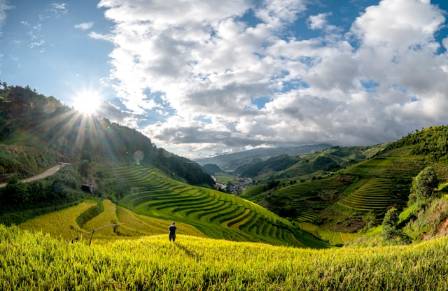
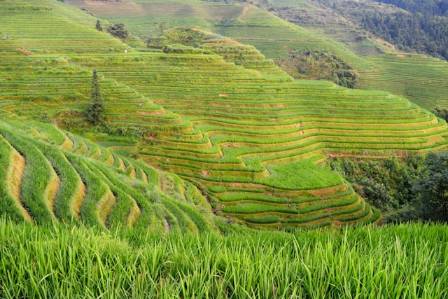
Asia is perhaps the region most closely associated with terrace agriculture, particularly because of its famous rice terraces. Rice cultivation requires large amounts of water, and flat fields that can hold standing water are ideal for production. Since naturally level land is limited in mountainous regions, farmers created stepped terraces along hillsides, turning difficult terrain into highly productive farmland.
These carefully designed terraces not only provide growing space but also help reduce soil erosion and prevent valuable nutrients from being washed away. Without terraces, farming on steep slopes would quickly damage the soil and make agriculture unsustainable. With proper maintenance and careful management, terraced fields can remain productive for generations.
The remarkable rice terraces of the Philippine Cordillera region in Ifugao Province are among the most impressive examples. Believed to have been constructed around 2,000 years ago, these terraces were recognized as a UNESCO World Heritage Site in 1995 and are often called the “Eighth Wonder of the World.” An ancient irrigation system, supplied by mountain forests above the fields, continues to support their cultivation. Although they once faced threats from environmental changes and deforestation, conservation efforts have helped protect this extraordinary landscape.
Beyond rice, terrace farming has also supported the cultivation of crops such as wheat, barley, and other grains throughout eastern and southeastern Asia. The technique has become a vital part of agricultural traditions across the continent.
Terrace Agriculture Around the Mediterranean
Terrace farming has played an important role in Mediterranean agriculture for centuries. Countries surrounding the Mediterranean Sea have used hillside terraces to grow vineyards, olive trees, fruit trees, and other valuable crops. By transforming steep coastal slopes into farmland, communities were able to cultivate foods and produce wines that became famous around the world.
In Switzerland’s Lavaux region, vineyards spread across terraces along the northern shores of Lake Geneva. These terraces have existed since at least the 11th century and remain an important part of the region’s cultural and agricultural heritage.
The same approach has been used throughout Mediterranean landscapes, where terraces allow farmers to maximize limited land, improve water management, and create productive growing areas on otherwise challenging terrain.
Terrace Farming in South America
Long before modern farming techniques, civilizations in South America recognized the value of terrace agriculture. The Inca civilization and earlier cultures developed sophisticated terraced farming systems throughout the Andes Mountains to support large populations in one of the world’s most difficult agricultural environments.
The steep slopes and unpredictable water sources of the Andes presented major obstacles, yet ancient farmers successfully adapted by building terraces reinforced with stone walls. These structures offered several advantages: they reduced erosion, improved drainage, and absorbed heat from the sun during the day before releasing warmth at night. This helped protect crops from freezing temperatures and extended the growing season.
The agricultural terraces surrounding Machu Picchu demonstrate the remarkable engineering skills of the Incas. These landscapes show how ancient communities were able to produce food in extreme environments through careful planning and innovation.
Today, farmers in the Andes are once again embracing traditional terrace farming methods. These techniques help conserve water, protect the environment, and encourage the cultivation of native crops that are well adapted to mountain climates.
Terrace Farming and Tea Plantations
Tea growers around the world have also benefited from terrace farming. The carefully arranged rows of tea plants covering hillsides create some of the most visually striking agricultural landscapes on Earth.
Terraced tea fields are especially famous in regions of China and other parts of Asia, where their vibrant green patterns attract visitors as well as support tea production. These landscapes demonstrate how farming methods can combine practical agricultural benefits with remarkable natural beauty.
Ancient Terrace Farming Around the World
Terrace farming is one of humanity’s oldest agricultural solutions, and archaeological discoveries continue to reveal how widely it was practiced by ancient societies.
Near the ancient city of Petra in present-day Jordan, researchers discovered evidence that terrace agriculture existed thousands of years ago. These farming systems allowed communities to grow crops such as wheat, grapes, and possibly olives in an otherwise dry and challenging desert environment. Through careful water management and land preparation, farmers created productive green areas where agriculture once seemed impossible.
Ancient terraces have also been found around Jerusalem and the Judean Mountains. Local farmers traditionally used these stepped landscapes to grow grapes, olives, pomegranates, and figs, relying mainly on natural rainfall rather than artificial irrigation.
The Importance of Terrace Farming Today
At its core, terrace farming represents human creativity and resilience. It transforms land that would otherwise be unsuitable for agriculture into valuable farmland capable of supporting communities.
For thousands of years, this method has helped civilizations survive in mountainous regions by improving food production, conserving water, and protecting soil. From Asia’s rice terraces to the Andes’ ancient fields, terrace farming remains a powerful reminder of how humans have adapted to and worked with nature to create sustainable agricultural systems.
Nearby projects

· en
Exploring the World of Free Climbing: A Comprehensive Guide
Elowen Seraph

· en
Eight Secrets of the Taj Mahal
Maelin Frost

· en
Best Single Chairs for Living Room
Chloe Dean

· en
The Comprehensive Manual for Selecting Women’s Overalls
Noah Harrison Blake

· en
The Most Beautiful Underwater Wonders in the World
Mike

· en
The World’s Only Completely Black Swan
Serin Blake