← Back to bench3 min build note
DIY note
Top Beginner Skiing Tips
The most crucial yet often ignored lesson for beginners is maintaining bent knees. New skiers tend to stand upright, which disrupts form, balance, and control. By bending your knees, you press your shins into the front of your boots, allowing the skis to respond better. It also helps position your torso over your legs, keeping you centered.
E
Eliza Carter
Maker
Bench tip
Read the full note below and keep tools nearby.
Shelf
Hobby build
1.Keep Your Knees Bent
The most crucial yet often ignored lesson for beginners is maintaining bent knees. New skiers tend to stand upright, which disrupts form, balance, and control. By bending your knees, you press your shins into the front of your boots, allowing the skis to respond better. It also helps position your torso over your legs, keeping you centered.
A bent stance also prepares you to handle bumps or uneven snow. Straight legs make you unstable, similar to standing stiff on a moving bus. Think you’re bending enough? Try sinking lower—you’ll notice a big improvement in handling rough terrain or steeper slopes.
Pro Tip: If your heels are lifting out of the boot’s heel cup, you’re probably not bending your knees deeply enough.
2.Invest in a Lesson
There’s a reason so many people learn skiing through the Professional Ski Instructors of America (PSIA) or the National Alpine Ski Training Center (NASTC)—professional guidance works. A trained instructor can spot mistakes you might not notice, adjust your technique, and accelerate your progress. Whether you’ve never been on snow or you’re hoping to master bumps, lessons are available for every level.
3.Take It Slow and Be Patient
Learning to ski doesn’t happen overnight. Only rare athletes move from beginner (green runs) to intermediate (blue runs) within a day, and even then mistakes are common. Don’t set expectations unrealistically high. If you feel stuck, pause, breathe, and reset your focus. Progress comes gradually with persistence.
Pro Tip: Celebrate small milestones. Each successful turn is a step forward.
4.Dress Properly (Skip the Jeans)
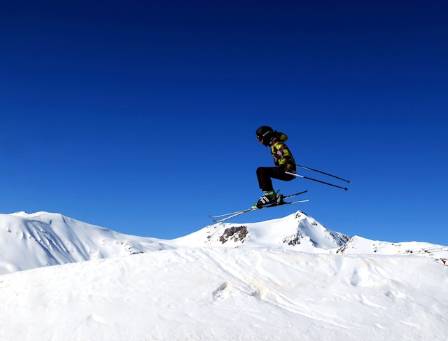
Looking like a pro isn’t necessary, but being dressed correctly is. Boots are the top priority—comfortable, well-fitted boots can decide whether you enjoy skiing or not. Snow pants are equally important since you’ll fall often, and staying dry will keep you on the slopes longer. A helmet is strongly recommended, along with gloves, goggles, and sunscreen.
Pro Tip: If you forgot gear, most resorts rent essentials like helmets and pants for a small fee.
5.Don’t Rely on Family or Friends to Teach You
It might seem natural to learn from a partner or relative, but emotions can run high when frustration sets in. Arguments mid-slope don’t help anyone. A neutral instructor provides guidance without the personal tension.
Pro Tip: Teaching kids is different—they often respond better to parents than adults do.
6.Select the Right Resort
Not every mountain is beginner-friendly. Some resorts cater to advanced skiers, while others prioritize family programs, ski schools, and well-groomed runs. For newcomers, these features create a smoother learning curve.
Pro Tip: Don’t overlook your local hill. Many small areas have excellent beginner slopes for practice.
7.Accept That Falling Is Part of the Process
Falling is unavoidable when learning, but it’s also essential for progress. Snow is softer than most expect, and at beginner speeds, falls are usually harmless. If possible, aim to fall to the side to reduce strain on joints, and try to stop sliding quickly. Most importantly, get back up and keep going.
8.Begin on Suitable Terrain
Jumping into steep or advanced slopes is a mistake. Beginner (green) trails are shorter, flatter, and groomed, offering fewer obstacles. Some resorts even have “magic carpet” lifts to help newcomers practice before advancing to chairlifts. Building skills on easy slopes first leads to stronger technique later.
Pro Tip: Flat terrain is useful, but you still need some speed to improve. Aim for a balance.
9.Maintain Balance Over Your Skis
Skiing requires a balanced, centered stance. Beginners often lean too far back or forward, creating extra strain and poor control. Keep your shoulders facing downhill with your legs directly under your torso. Placing your weight over the ski’s narrowest section—the sweet spot—allows the skis to carry you efficiently.
Pro Tip: If your feet are too far ahead of your body, you’ll burn extra energy. Balanced skiing is smoother and far less tiring.
Nearby projects

· en
How to Paint a Daisy in Watercolor
River Monroe

· en
A Step-by-Step Guide to Painting a Panda Bear
Victor Kane

· en
Beijing’s giant bird’s nest
Callum Rhodes

· en
Examples of Terrace Farming Around the World
Oliver Sterling

· en
Amazing Nightstands That Always Work
Casey Vaughn

· en
How to Make Japanese Oden
Cameron Reese