DIY note
Macro Photography: Phalaenopsis Orchid
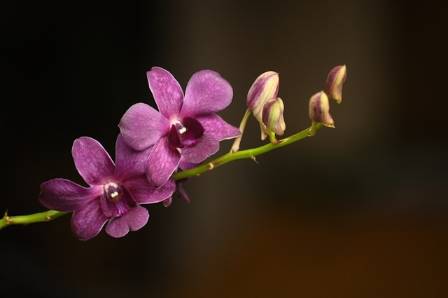
I’ve always been fascinated by macro photography (see some of my other examples). It allows you to see details that are visible to the naked eye, but with extraordinary clarity—details that most people usually overlook. Macro photography sits in that interesting space between what a microscope shows and what we see unaided. In photography terms, this usually starts at around a 1:1 reproduction ratio. Both of these orchid images were captured very close to that ratio, just a few millimeters shy.
Morgan Ellis
Maker
Bench tip
Read the full note below and keep tools nearby.
Shelf
Hobby build
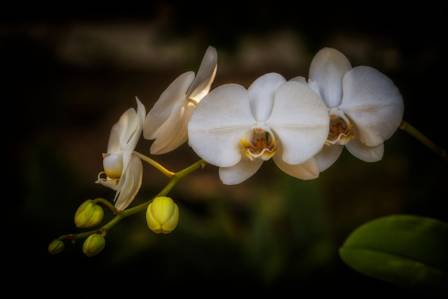
I recently captured a series of photos of my father-in-law’s orchid while visiting his home for the festival and finally had a chance to share them. This particular Phalaenopsis Orchid comes in an impressive array of colors. The one I photographed is primarily white with subtle hints of yellow and red. It somewhat resembles what one might imagine a “tiger orchid” to look like, though I’m not sure that’s a real common name. If you’re curious, you can check out the EXIF metadata for these shots here and here.
Both images were taken on a tripod, using long exposures of roughly 8–10 seconds. This ensured there was no movement in the flowers from air currents—a rare occurrence during the hour I spent trying to get the perfect composition.
I’ve always been fascinated by macro photography (see some of my other examples). It allows you to see details that are visible to the naked eye, but with extraordinary clarity—details that most people usually overlook. Macro photography sits in that interesting space between what a microscope shows and what we see unaided. In photography terms, this usually starts at around a 1:1 reproduction ratio. Both of these orchid images were captured very close to that ratio, just a few millimeters shy.
You can achieve stunning macro results with minimal gear. Even a standard kit lens paired with an inexpensive extension tube—like the Nikon PK-13 I recently picked up on eBay for $20—can work wonders. While a DSLR or mirrorless camera generally produces more realistic results than a compact point-and-shoot, you can start experimenting by testing your lens’s minimum focusing distance and seeing how close you can get to your subject. Adding an extension tube can open up a whole new world of macro possibilities that may surprise you.
Nearby projects
· en
Guinea Pig Care for Pet Owners
Iris Dalton

· en
The Pinnacle of Luxury: 7 Prestigious Clothing Brands
Penelope Sage
· en
The Snake Plant: A Complete Guide to Sansevieria Care and Cultivation
Madison King
· en
Blue Tears
Damon Wells
· en
Eight Secrets of the Taj Mahal
Maelin Frost
· en
The Formidable World of the Jaguar
Brianna Foster